
Tony J. Westbrook Jr.
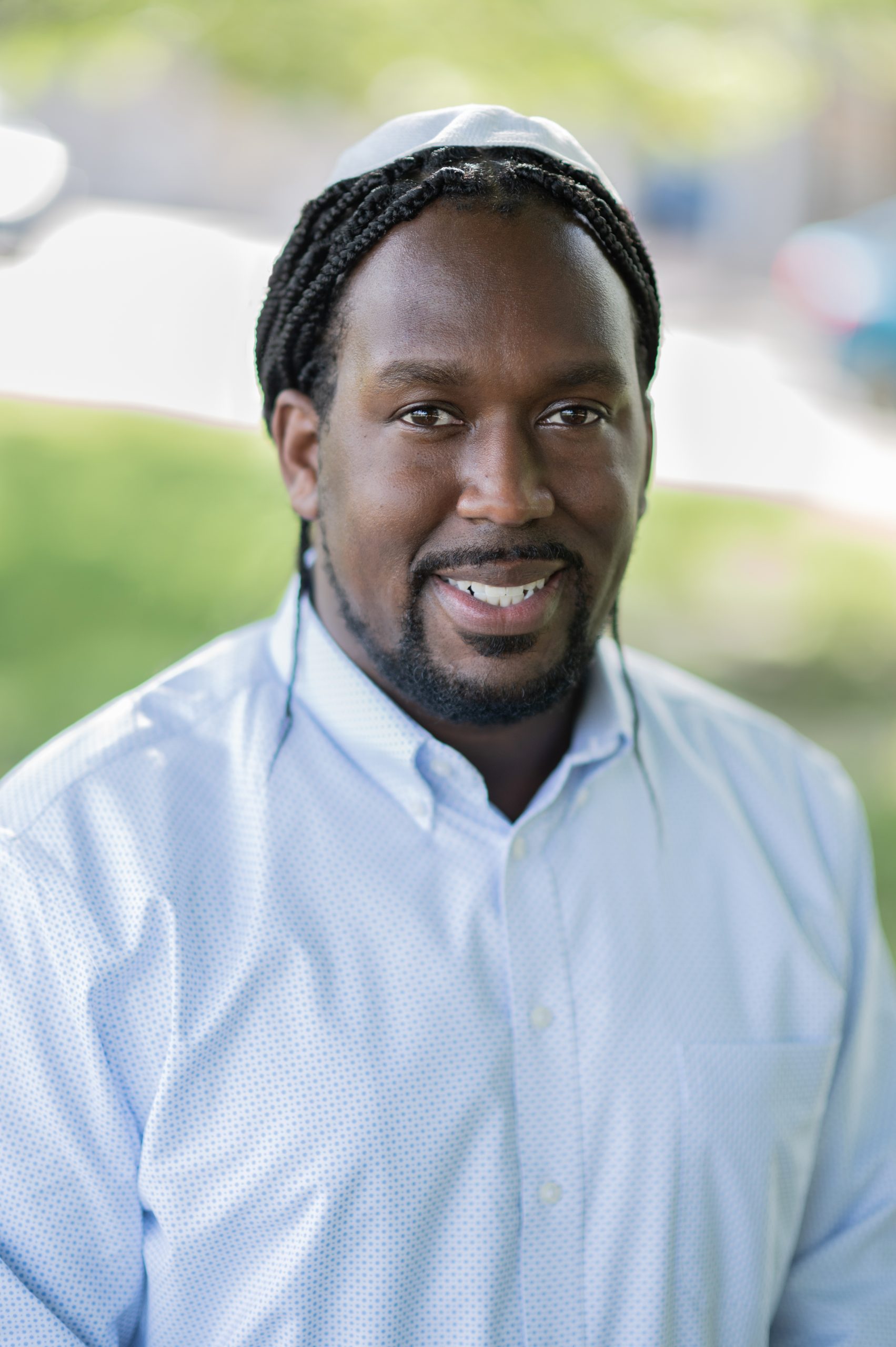
In 2022, Tony J. Westbrook, Jr. led a group of 16 Jewish professionals to Rwanda, as part of his work with Repair the World. They witnessed and learned about how the Rwandans rebuilt their society and educated a new generation after the genocide in the late 1990s.
For Westbrook, a black, orthodox Jewish leader, it was the first time in his life that a majority of the people around him looked like him. The Rwandans didn’t care that the group was Jewish; they were interested in sharing their experience. During their stay, a Chabad rabbi delivered food on motorbike, for Westbrook and another participant.
The “fantastic” trip brought together so many of Westbrook’s passions: social justice, experiential education, service, creative leadership, community building.
In his varied career, Westbrook, who is now a rabbinical student, has served as National Director of Jewish Service Leaning for Repair the World and as a Jewish Life consultant responsible for developing diversity, equity, inclusion and justice programming and training for several organizations. He has created social media campaigns for Jewish institutions, served in many capacities at Jewish summer camps, offered pastoral care counseling at Honeymoon Israel Chicago and has developed curricula and taught in many settings around the world.
Westbrook is known for his hospitality — hosting Shabbat dinners with guests from different backgrounds, wherever he is in the world, and gathering people together with great conversation and delicious food.
“I don’t like the idea of folks not having a place to go on Shabbat.”
He explains that the thread connecting his many projects and interests is threefold: making Judaism accessible to all, making it relevant and building community
“I have had the opportunity to study around this country and the world, and have met so many folks from a wide age range who feel like Judaism is not accessible, that it’s a religion of old books and rules for old men. I think Judaism is a wonderful blueprint for how to live one’s life. Our ancient texts still have something to offer.”
He now lives in Los Angeles and is a second year student at Ziegler School of Rabbinic Studies at American Jewish University. While he considers himself Modern Orthodox and Ziegler is affiliated with the Conservative movement, he feels it’s a good fit for someone who’s gay.
“What sold me on Ziegler was when Rabbi Bradley Artson, the school’s dean, told me, ‘We want to make you the rabbi you want to be.”
While attending rabbinical school, he is doing a rabbinic internship at Adath Israel in Cincinnati. He continues to be involved in social justice work and leadership training. Not sure of his plans after school, he is open to all sorts of possibilities, whether congregational work or work in Jewish education.
Recently, he graduated from the M2 Institute for Jewish Experiential Education Senior Educators program. In addition, he served the USCJ (United Synagogue of Conservative Judaism) as the Racial Justice, Equity and Inclusion Specialist, working to elevate racial justice education and nurture a welcoming environment for all.
Acknowledging that this is a challenging moment for DEI (Diversity, Equity, Inclusion) work, he says, “I will continue to pursue DEI work. I’m a Black, gay orthodox man living in America. These things affect my life very day. But I don’t want to be pigeon-holed as a DEI rabbi.”
Westbrook grew up in a large Christian religious family in St. Louis. They belonged to a non-denominational evangelical Christian Church, part of the larger Black Church movement.
“The way I live my life is not so different from the way I grew up,” he says. “I grew up as a frum Christian. We didn’t listen to a lot of secular music or read secular books.”
“I’ve always been a seeker. I always wanted to know more. I like being able to ask questions and not always getting the answer I want. It’s the way I grew up.”
He was first exposed to Judaism and Jewish thought during high school when he participated in a city-wide program called Cultural Leadership bringing together black and Jewish students to learn about racism and antisemitism in an effort to create a new generation of civil rights activists. Part of their program was celebrating holidays together and experiencing home hospitality. Prior to that, he explains, “I knew that Jews were a people. My only context for Jews was the Old Testament and the Holocaust and nothing in between.”
From the beginning, he loved Shabbat. He had been accustomed to having his extended family gather regularly for meals but something about Shabbat and spirituality “sparked curiosity and kept growing.”
When he won the Pomegranate Prize in 2021, he was busy producing videos that went viral on TikTok (as well as across Facebook and Instagram), educating and entertaining his many followers around the world – at the height of the pandemic – about engaging with Judaism at home, Jewish holidays and also, about being a Jew of Color. His tag: @FrumJewishBlackBoy. He moved away from doing TikTok as he faced a lot of antisemitism, even death threats, online, but continues in his role as a social media influencer to provide Jewish education online.
At the time he won, he was serving as assistant director of the Hillel at Washington University in St. Louis. There, he was involved with developing Jewish learning and Israel education curriculum, and successfully pivoted Hillel program to Zoom. Before that he did other work in Jewish education, through Jewish camping, programming, leadership development and teaching.
He used the Pomegranate Prize Funds toward several “unique Jewish experiences” related to skill building, networking and building community. In 2023, he attended “Passover in the Desert,” a program very different from the ways he practices, which inspired him to think anew about community building. In addition, he participated in online learning to further his text skills
in preparation for rabbinical school and he attended conferences to network with other Jewish professionals.
Viewing Jewish education, he ’d like to see the barriers of entry lowered, whether financial or other issues of access.
“We have to meet people where they are. I want to give people the tools so that they can engage with the texts themselves and see them as relevant.
He admits that sitting in class has never been easy for him – in rabbinical school, he has to get up from time to time – and would like to apply the summer camp model to Jewish education.
When asked about the source of his tremendous passion and high energy for things Jewish, he says, “Judaism has been a foundational cradle and stepping stone. I’ve seen how the Jewish community showed up for me, and the supports that continue to be there. If I can give back a tiny percentage of what I’ve been given by incredible teachers, rabbis and lay people, who’ve taught me so much about living an authentic Jewish life. I want to help others navigate that journey.”