


Shara Peters
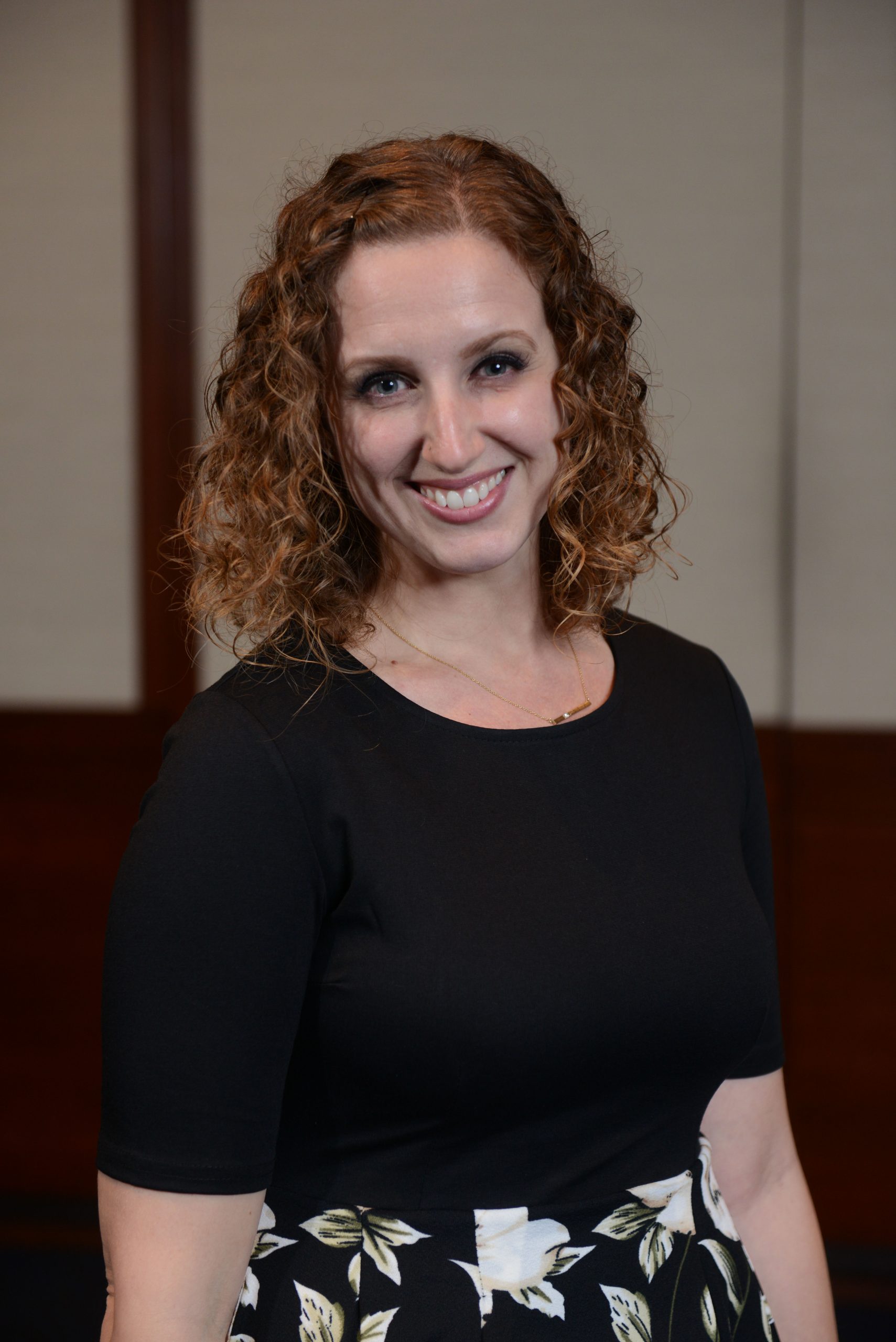
As a teacher and now as a principal, Shara Peters is a passionate educator, very interested in innovation and new ways of thinking about teaching and learning and, always, about how schools can best meet the needs of all of their students.
Now the general studies principal at Pressman Academy in Los Angeles, Peters is particularly interested in exploring opportunities to integrate the ideas behind Project Based Learning into Jewish Day School education.
Project Based Learning, she explains, is an umbrella term referring to students doing authentic work that transcends the walls of the school building and has a public audience. They learn new skills and content as they go along, in order to complete the project.
“I very much believe in student-driven learning, having students doing real world work – not just filling out a worksheet,” she says. As an example, students at Pressman came up with the idea of creating a store – they employed math principles and figured out to operate it and market it and used creative writing skills as well.
“Through their actions, they are learning,” she says. “That’s the kind of learning I hold up as an ideal.”
In all that she does, Peters upholds academic rigor. Before joining the leadership team at Pressman, Peters served as Head of School at Adat Ari El Day School, and she has also taught at Sinai Akiba Academy in Los Angeles, Tarbut V’Torah in Irvine, California and Heschel Day School in Northridge, California.
At Pressman, she works closely with the Head of School to carry out the school’s vision. She sometimes describes her role as the key faculty culture officer, looking out for the faculty culture as well as the student culture.
“How does this place run? Are we living up to our values? That is where my work focuses,” she says.
Peters works very closely with the Judaic Studies team, collaborating on integrated learning projects. She is also very interested in the concepts of design thinking in education, which involves empathetic thinking. As she says, “We are trying to raise whole humans here.”
As a teacher, she also developed innovative curricular projects and studies, and she and a colleague published articles about their work in Scientific America and Education Week. In 2010, when handheld technology was just becoming more present in classrooms, they studied how children were thinking differently when using laptops and smart phones.
These days, what keeps her up at night is thinking about how to best meet the needs of all the children in the school, with many having significantly shorter attention spans, and a higher percentage than before with ADHD, anxiety, and sensory processing diagnoses.
“We need to maintain the quality of education that our day school provides while making sure we can deliver that to the kids who want and need it,” she says. “When we are starting to notice that more and more students are needing the system to make accommodations for them, it’s time to change the system.”
She spends her days at Pressman working to make sure that the assistant principals, department chairs, teachers, and ultimately students get what they need. Four days a week, she teaches an advisory class to middle school students and also makes time to meet one-on-one with students every day. In a monthly rotation, she sees every student in her advisory for a “social, emotional, and academic tune-up.” She says, “We want to make sure that no one falls between the cracks.”
Peters also works with the parent body and enjoys talking to parents about meaningful matters in their lives. She facilitates learning with them on topics like reading acquisition, social media and child development. Over last year, she and her colleagues initiated programs to help teach parents to learn to listen to people with differing opinions, which was particularly relevant after October 7th.
Even as a child, Peters knew that she wanted to be a teacher. The daughter of a teachers, she has been in a classroom capacity since she was 13 and began volunteering as a teacher at her Hebrew School on Orange County, California. When she was 15, she began teaching dance and did that for 10 years, through her college years, and then shifted to more formal classroom education.
“There was no question for me that this was what I wanted to do,” she says.
Growing up, she attended public school in Orange County, California and faced a lot of antisemitism. That propelled her to take an active role in her synagogue, a place where she felt safe. Along with teaching in the religious school, she helped to run the youth group and assisted in the office. When she had an opportunity to visit a Jewish day school and witnessed a lesson comparing the leadership styles of the biblical Moses and the Reverend Martin Luther King, she was totally impressed that kids were taught to think in that way.
“I knew that I wanted the children I didn’t yet have to go to a Jewish school. And I know that I would be a teacher,” she says, adding, “I knew that if I were going to be able to afford a Jewish school, I would have to work there.”
She now has two children attending Pressman, and she says that while it can be complicated, she loves it. She navigates this role every day, since she supervises her kids’ teachers, and it’s possible that her kids might be sent to the Principal’s office – and have to face her. She isn’t alone in walking this line, as among the members of her leadership team they have 18 kids in the school.
“It’s very much a village. We all care for our children, for each other’s children and for all the other children.”
She says that being an educator also gives her much insight as a parent, providing frames of reference about behavior when she is dealing with her own children at home.
Peters used the funding from the Pomegranate Prize for books and coaching. When she joined Pressman, the school was meeting remotely because of COVID and she had to make a quick transition, for which the coaches were very helpful. She has appreciated the “incredible connections” she has made with colleagues around the country through the Prize.
Additionally, in the spring of 2025, she is using her remaining funds to travel to Finland and participate in a tour for international educators about the Finnish education system, where children are raised in a way that both preserves childhood yet also results in high academic achievement. Pressman’s Head of School and Judaic Studies Principal were able to secure funding to go as well, and the three of them will be able to study the lessons learned there and consider how to bring them back to their Jewish day school environment.
When asked about what she might like to do next, she says emphatically, “I am really happy where I am now. I have been a classroom teacher in three schools and ran a small school, and haven’t been in any one role long enough to feel like an expert. This is my fifth year here, and I’m really pleased to be in the same school. I’m no longer feeling like I’m catching my breath. Staying power matters a lot.”