

Rabbi Jordan Soffer
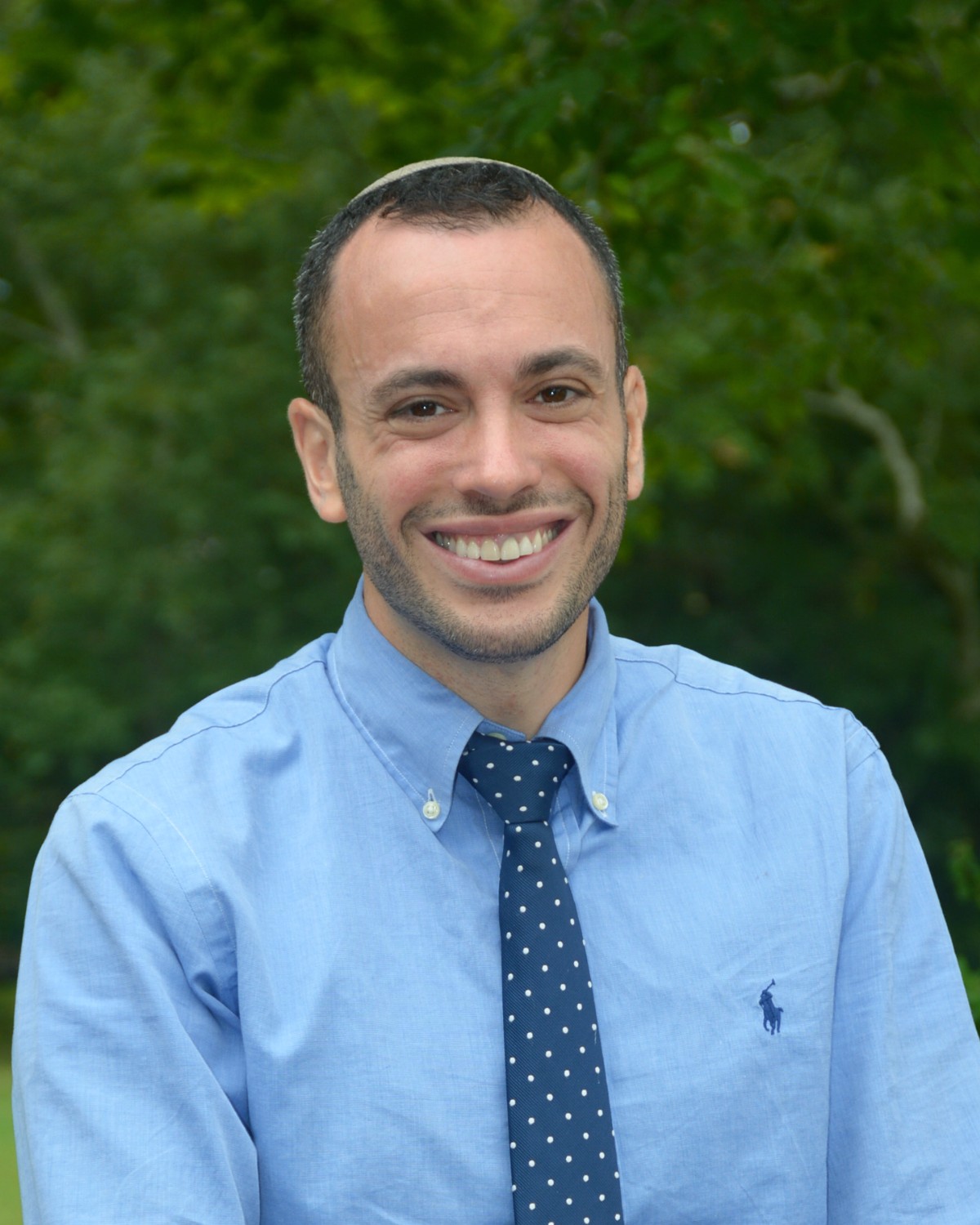
Rabbi Jordan Soffer likes to talk about positivity and optimism. His daily life is grounded in an upbeat philosophy. At the Modern Orthodox day school he leads, Striar Hebrew Academy in Sharon, Massachusetts, he works hard to create an atmosphere infused with positive energy.
“I really do think it’s palpable,” he says of the classrooms and hallways of the school, serving kindergarten through fifth graders. “We constantly get feedback, that people are overwhelmed by the excitement, the love of learning, the sense of awe and wonder, love of identity, all nurtured from a young age.”
Rabbi Soffer just completed his fifth year as Head of School at Striar. In this role, he oversees all educational and administrative activities at the school and functions as the school rabbi. Awarded a 2020 Pomegranate Prize, he is a Wexner Field Fellow and the Rabbinic Mentor for the Day School Leadership Training Institute. He is now pursuing a doctorate in Jewish education from Yeshiva University.
Halfway between Boston, Massachusetts and Providence, Rhode Island, Striar Academy now educates 97 students. While other heads of school might boast that they know the names of every student, Rabbi Soffer not only knows their names, but has been to their homes, knows their parents and siblings.
“There’s a totally different level of relationship at our school. It’s the culture of the school. We call it Cousin Culture.”
When a new family moves to town, they support them with meal trains and Shabbat meal invitations, and meet with the family to help in their acculturation to the school. “That’s part of our academic mission,” he says.
Rabbi Soffer enjoys working with any school age children, from nursery through 12th grade. At Striar, he intentionally teaches three time a week, including a Mishnah class for the oldest kids. He spends a of time visiting other classrooms and talking with students and teachers. A father of four with three children in the school, he loves his work.
He explains that the Striar teachers share his enthusiasm, and it’s a character trait they look for in new teachers. It’s a quality they call SHASyness – named for the school, the Striar Hebrew Academy of Sharon. Additionally, he says, they invest “tons of funds” in professional development that focuses on their philosophy. And teachers tend to stay at the school for many years, sometimes decades.
At the school, girls and boys are treated equally, outside of the dress code, and all learn the same subjects, together. (This is not always the case in Modern Orthodox schools.)
When the fifth-graders performed a play they wrote at their 2024 graduation, they outlined – in a humorous way — all the reasons they can’t get learning done at school, emphasizing how much learning gets done outside of classes, whether collecting and distributing food for the local food pantry, or when classes are canceled on Fridays for Israeli dancing or the annual Yom Shemesh, when the entire school takes off to go hiking for a day.
“Positivity is what Judaism needs right now,” Rabbi Jordan Soffer says. “There a big focus on communal crises and challenges and about how Judaism has to adapt to face new realities. We need to focus on what is good and right, and to celebrate the amazing gifts that we have!”
“For me, I’m in a constant love affair with Judaism. It enriches my life, every day. I can’t imagine my home without it. Judaism and Torah are eternal and amazing! These days there’s so much pain that exists in the world. I think that it’s the enthusiasm, vigor and vitality of Judaism can fill the whole, and ease the pain. It’s not a hole that needs to be filled in Judaism, but a hole in the world that Judaism can fill.”
“It’s something we take for granted when we focus only on internal inward-facing conversations. I don’t mean to dismiss those conversations but to situate them in a perspective of optimism and joy and love and gratitude.”
Six months after Rabbi Soffer joined the leadership team at the school, his buoyancy was tested, when the Covid pandemic forced them to transition to different models of education, including distance learning. He and his team worked with greater intentionality and made sure to infuse the new format with a sense of wonder and awe, as they did –and do — in person. They managed well, and he is now thrilled that they are back on track.
His own dedication to Jewish education grew, in part, out of his own family experience. His mother was a Jewish educator focusing on early childhood. His father was a lay leader, serving at times as president of their synagogue and the conservative day school he attended.
“It was in our blood,” he says. “We all believed in Jewish education for as long as I can remember.”
When asked about a particular educator who inspired his own vision, he cites Dr. Elliot Prager, “a committed and conscious Jewish thought leader,” who was his school principal at Reuven Gittelman Academy (now closed) and then at other schools in the New York suburbs before making aliyah.
While he grew up attending conservative as well as some orthodox institutions, Rabbi Soffer, who was ordained at Yeshivat Chovevei Torah, identifies as Modern Orthodox, which he says is not a major shift from the way he grew up.
As a rabbinical student, he knew that he didn’t want to go into pulpit work, but always wanted to be in day school. “My question was always, ‘What was the best path to day school leadership, smicha (ordination) or a doctorate. I just figured I would do both.” .
His rabbinic training informs everything he does, he says. “It’s how I approach everything .I feel like it is the both the tune and the lyrics, I just sing the song. It’s the whole language for how I think about issues: it’s my frame of reference. Learning gemara, learning Jewish thought, Jewish philosophy, all informs the work that we are doing.”
He has used the Pomegranate award funding primarily to pay for his doctoral program at Yeshiva University. Studying educational leadership, he has completed his coursework and is now in the middle of writing his dissertation. For his subject, he has chosen a topic rarely studied: The
experience of non-orthodox families at orthodox day schools. It’s an academic interest and something he has experience with at Striar, where they have some non-orthodox families.
Rabbi Soffer frequently contributes articles to academic journals as well as more general-interest websites like the Times of Israel and eJewish Philanthropy. “I used to write about controversial issues like intermarriage, but I’ve grown older, I’ve really shifted my focus to positivity and the love and joy of learning.
How does he stay positive? I think it’s a matter of feeling and expressing gratitude. Honestly, sometimes God talk is missing from Jewish spaces. We have to remember the gifts we have in life. I try to appreciate all the good that’s happening right now.”