
Rabbi Jessy Dressin
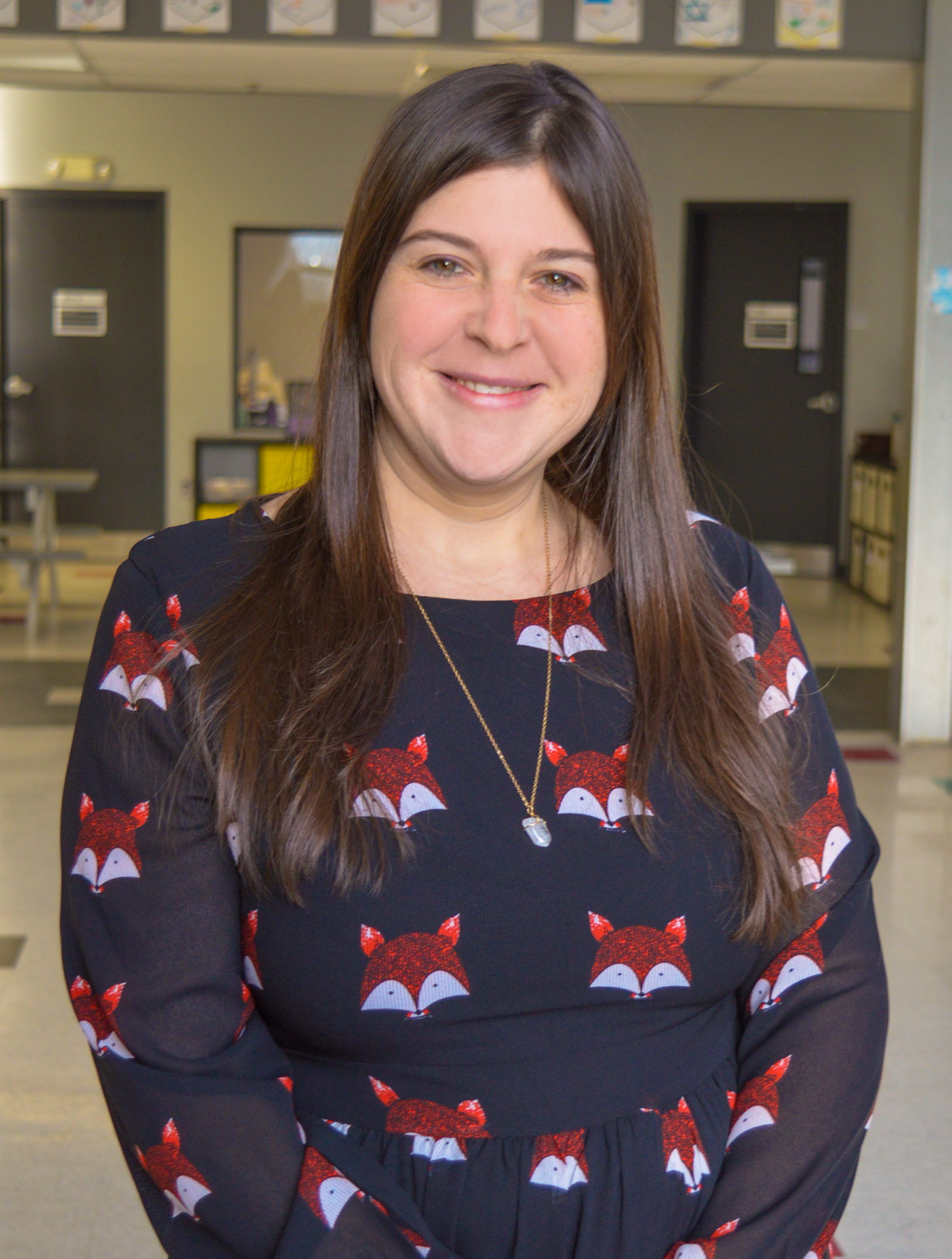
Rabbi Jessy Dressin’s story is an innovator’s dream come true: A creative vision, a financial backer who shares her mission and drive, a beautiful and meaningful space in which to create community.
Her new non-profit, Third Space, is housed in the historic Shaarei Tfiloh Synagogue in West Baltimore, known in its heyday as The Shul in The Park. Rabbi Dressin serves as executive director; the organization draws its name from sociologist Ray Oldenburg’s idea that a healthy society needs three kinds of spaces. One is a private space like a home, the second is a place of work and productivity like an office or school and the third is a place where people with shared interests might gather, like a coffee shop or park.
Rabbi Dressin and a team of practical dreamers have built Shaarei Tfiloh into Third Space at Shaarei Tfiloh – a new place for Jewish culture, wisdom and tradition, not duplicating the kinds of activities going on elsewhere around the city, but offering an alternative.
As they explain on their newly-launched website, “We intend it to be a container for creativity, collaboration, exploration, and discovery. We are committed to the vision of being shaarei – gateways in Hebrew – a hub for learning, connecting, and growing together.”
The origin story is that in the summer of 2002, around the time that the Supreme Court overturned Roe v. Wade, Rabbi Dressin gathered some friends for a “Havdalah rage ritual” in a friend’s backyard. There she met business executive Jon Cordish, whose family is deeply invested in both the Jewish community and Baltimore City.
A few weeks later, Cordish reached out to her to have a conversation about Shaarei Tfiloh. His family had been involved in founding the congregation in 1921. His great-grandfather was the synagogue’s first president. As most Jews moved out of the neighborhood, the Cordish and Perlow families were instrumental in ensuring the building would be maintained as a Jewish space, even as for decades most of what took place were services and celebrations around Rosh Hashanah and Yom Kippur.
Cordish shared his idea that the synagogue become a place of meaningful Jewish learning, and Rabbi Dressin agreed, further envisioning a venue of Jewish art and culture, including a multi-purpose community space, adding value to the immediate community. The two agreed to move forward, and the Cordish family ensured a three year runway of funding to get Third Space at Shaarei Tfiloh up and running.
Third Space at Shaarei Tfiloh opened its doors just before Shavuot (June, 2024) parallel to its efforts to build a staff team, launch a website and book an initial season of happenings. In the Fall of 2024, a full season of programming, mostly focused on adult learning, will be underway. Some of the highlights slated for 2024 include a Sukkot festival featuring chef Michael Twitty, Matisyahu and Rabbi Sharon Brous. They are also excited to create new holiday traditions around the rhythm of Jewish time including an afternoon of learning and break fast for Yom Kippur and a Happy (Hour) Shabbat once a month featuring a balance of musical connection and food shared with friends. Additionally, they host monthly neighborhood
meetings, and are working to strengthen relationships at Third Space between the black and Jewish community, centering the leadership of Jews of Color.
Rabbi Dressin explains that those who have often been relegated to the margins, either by experience or narrative, will be at the center of Third Space. “This space should highlight, through its leadership and professional staff, and showcase all those identities deemed peripheral,” she says, naming queer Jews, Jews by choice and, Jews of color as examples.
“I’ve tried to be responsive to the growing number of people who claim to be ‘spiritual, not religious’ and might find meaningful pathways in non-traditional spaces,” she says.
Rabbi Dressin, who was ordained at Hebrew Union College – Jewish Institute of Religion in Los Angeles, says that she loves Judaism and Jewish learning. She realized that while her peers might share her interest in Jewish culture and religion, they are not necessarily inspired or feel compelled to engage in more traditional Jewish settings, many of which are membership driven and dues based.
“We have to update how we deliver this timeless tradition,” she says.
In Baltimore, she is “not loyal to any one synagogue but an enthusiast of multiple.” Sometimes, she fills in for her rabbinic colleagues at their synagogues, and considers that a privilege. She enjoys mentoring young rabbis who are interested in the role of community rabbi.
Before getting involved with Third Space at Shaarei Tfiloh, Rabbi Dressin worked for Repair the World, first as the Baltimore Executive Director and then in an executive role in the organization in several positions, most recently as the senior director of Jewish education.
Before that, she served as a community rabbi in Baltimore, working out the JCC of Greater Baltimore. Among her projects was founding Charm City Tribe, an initiative for people in their 20s and 30s in Baltimore tapping into Jewish tradition in creative and meaningful ways – they celebrated Jewish holidays in the public marketplace, like popping up a sukkah on the back of a pick up truck at the Ravens games and sponsoring a “Chanukah Brew Ha Ha” at Union Craft Brewing, where her husband is now an employee owner. As she is doing now with Third Space, she worked to take Jewish programming and celebration outside of institutions with what she calls “a low barrier to entry, without sacrificing deep content.”
Rabbi Dressin used the funding from her Pomegranate Award to take a course at Harvard’s Kennedy School on adaptive leadership and also studied Talmud at SVAARA and studied Mussar with a chavruta, guided by Rabbi David Jaffe.
“I have had a front row seat to the greatest things happening in the Jewish world, educationally.”
She grew up in Fairfax County in Virginia, although she says that her DNA “is 50 percent Brooklyn and 50 percent Queens.” Her parents had no particular plan to join a synagogue but found a home at a local Reform congregation after Rabbi Dressin inquired about having a Bat Mitzvah. Rabbi Schwartzman, who served at Temple Rodef Shalom then and is now senior rabbi, remains one of Rabbi Dressin’s mentors.
“I fell in love with Judaism and loved Hebrew School. I knew from a young age that I wanted to be a teacher of Jewish tradition. I was also aware that not all my peers were as inspired as I was. I realized then that I had to do something to contribute to the Jewish people.”
Over time she discovered that there was a particular demographic of Jews that she was prime to serve and, hopefully, help to discover a connection to Jewish tradition and wisdom that might inspire and nourish them.
Another mentor is her late teacher, Rabbi Richard Levy, who encouraged her “to think about the frameworks in which Judaism can be infinitely meaningful and accessible.”
She adds, “I am grateful to my teacher Michal Zeldin, who once gave our class the question, “If a funder offers you a million dollars, would you be able to tell them what you’d like to do with that money?”