


Natan Kuchar
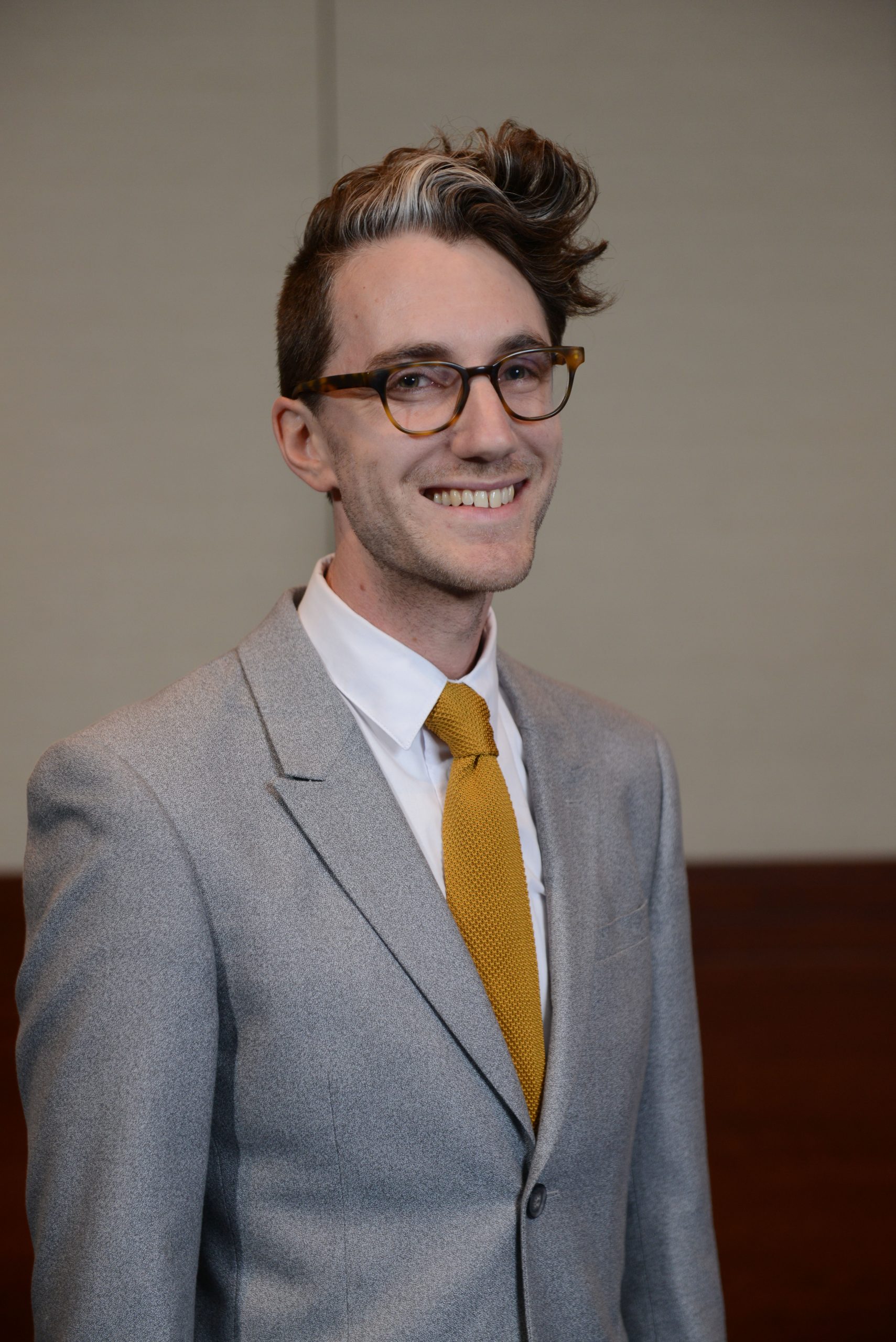
For Natan Kuchar, creativity isn’t difficult to define.
“It’s about putting two things together. It’s when we build something, whether tangible, or a stronger understanding of ideas, like coming up with a metaphor. It can be about finding a thread between two peoples’ experience.
He adds, “There’s deep magic or electricity or something spiritual about that, for sure.”
Not limited to visual or performing arts, creativity is accessible to all, and at the center of his work as a Jewish educator.
As the director of experiential learning and community engagement at Oakland Hebrew Day School in Oakland, California, Kuchar is an educational impresario. He spends his days encouraging, exploring, pursuing and celebrating creativity throughout the school, and designing and leading wildly innovative programs for the wider school community. A 2019 Pomegranate Prize recipient, he also composes music and performs.
He notes that while his official school title is long, it’s “a combination of my strengths as a Jewish educator and it enables an opportunity for me to bring kids into learning with their bodies and all of their senses. This connective work is not just for students, but also between parents and families, with a goal of strengthening and expanding the community that our school is in.”
A recent event he curated for the school’s annual gathering of parents and staff, “Let’s Celebrate Havdalah,” was signature Kuchar: He arranged what he refers to as “the regular things” like wine, scotch, beautiful cheese platters, soup and dessert. Participants took part in the Havdalah ceremony together. Interspersed with the formal customs, Kuchar asked members of the community to share stories from their own lives about powerful moments they had experienced, related to one of the three pillars of the ritual, light, fragrance and wine.
“The stories were amazing,” he says, “bringing the Havdalah ritual alive in the room.” One art teacher, who is secular, spoke about moving from New York to California and discovering how big the sky is — and how the magnificent light at sunset, when she is teaching afterschool classes, deepens her connection to the place and the school.
The evening also featured a spice station, where people could make their own besamim, or spice collection, and another station for hot wax braiding of candles, for their own Havdalah ceremonies at home.
“My intention when gathering people together is to have more than an opportunity to shmooze, but to gather and share an experience, using many senses, rooted in ritual. It really makes the sharing of experience deeper and more connective, with more conversations about it; participants have a stronger feeling when looking back at the event. A by-product is people talking about our school and strengthening our community.”
Kuchar also initiated a school-wide program for students, called Tribes, where the students are organized into groups across grade levels, with the goals of connective interaction across ages and cultivating more student leadership. The 8th graders run monthly 45-minute programs, under Kuchar’s guidance.
Last year, he produced a community-wide project, Griefcase, bringing together 20 performers, all mourners, to share original songs, stories and poetry of personal loss. One by one, their voices were heard, in the style of The Moth, as hundreds of people, from different parts of the community, witnessed.
“We all carry these heavy suitcases of grief. We rarely have an opportunity to share these,” he says.
When he received the Pomegranate Prize, Kuchar was serving as music director at Jewish Community High School of the Bay Area. There, he used music to connect communities and developed a ritual of weekly community singing. While teaching, he worked toward a certificate in arts integration from the Alameda County Office of Education, which gave him important pedagogical tools toward his vision of creating communal experiences with creativity at the center.
When asked about the source of his own creativity, he notes that he has been a songwriter for many years and has played music with bands and directed bands.
“Music is a core thread through my life,” he says.
“I’m also very much inspired by being in conversation with people and am inspired by objects. I see that sometimes objects, more than written texts, can ignite the senses. I try to use different creative media in partnership with text, to understand the texts more deeply.”
Kuchar grew up in Sydney, Australia and moved to Boston to attend Berkley College of Music, where he studied composition and conducting. He then did a lot of performing and writing for stage and screen, moved back to Sydney and then to California.
He says that it’s particularly meaningful to work in Jewish settings “since I’m able to deepen my own Jewish practice and learning as I teach.
I also love being in a setting where I can feel the Jewish calendar. It hits me in the face, every holiday. I’m happy to be making this journey through the year along with the community.”
Kuchar is grateful for the Pomegranate Award, for the financial resources which have enabled him to accomplish some practical tasks like buying new equipment so that he can write and record music at home, and take part in a Fellowship with M2’s Senior Educator cohort (part of the Institute for Experiential Jewish Education). He is also thrilled to be connected to “this amazing community of educators.” “Even though we have different jobs and different roles in our communities, we are all asking the same questions, thinking about the same things. There are some people I’m constantly in touch with, texting about program ideas and challenges.”
He also hopes to use the prize toward an artist-in-residency program in Jerusalem this summer, at Kol HaOt, where he plans to continue to work on “Griefcase,” by writing and orchestrating music for the piece, and also recording the songs of his own grief journey. Since losing his father about 18 months ago, he says that music and writing have been very important tools. He wants to keep the songs alive through documenting them in a substantial way.
It seems that creativity is the very foundation of Kuchar’s life. When he was trying to buy a home in Berkeley in 2015 and there were competing bids, he sent the owners a recording of him singing “Our House” by Crosby, Stills, Nash and Young. While he wasn’t the highest bidder, he did get the house.
The unusual transaction was written about in newspapers and covered in local television news, and Kuchar was honored at Berkeley City Hall.
“This opened my eyes to how powerful art can be,” Kuchar says. “The song was the thing that made the offer feel more human, in its core. That’s what I want creativity and art to offer: a way to connect.”