
Na’amit Sturm Nagel
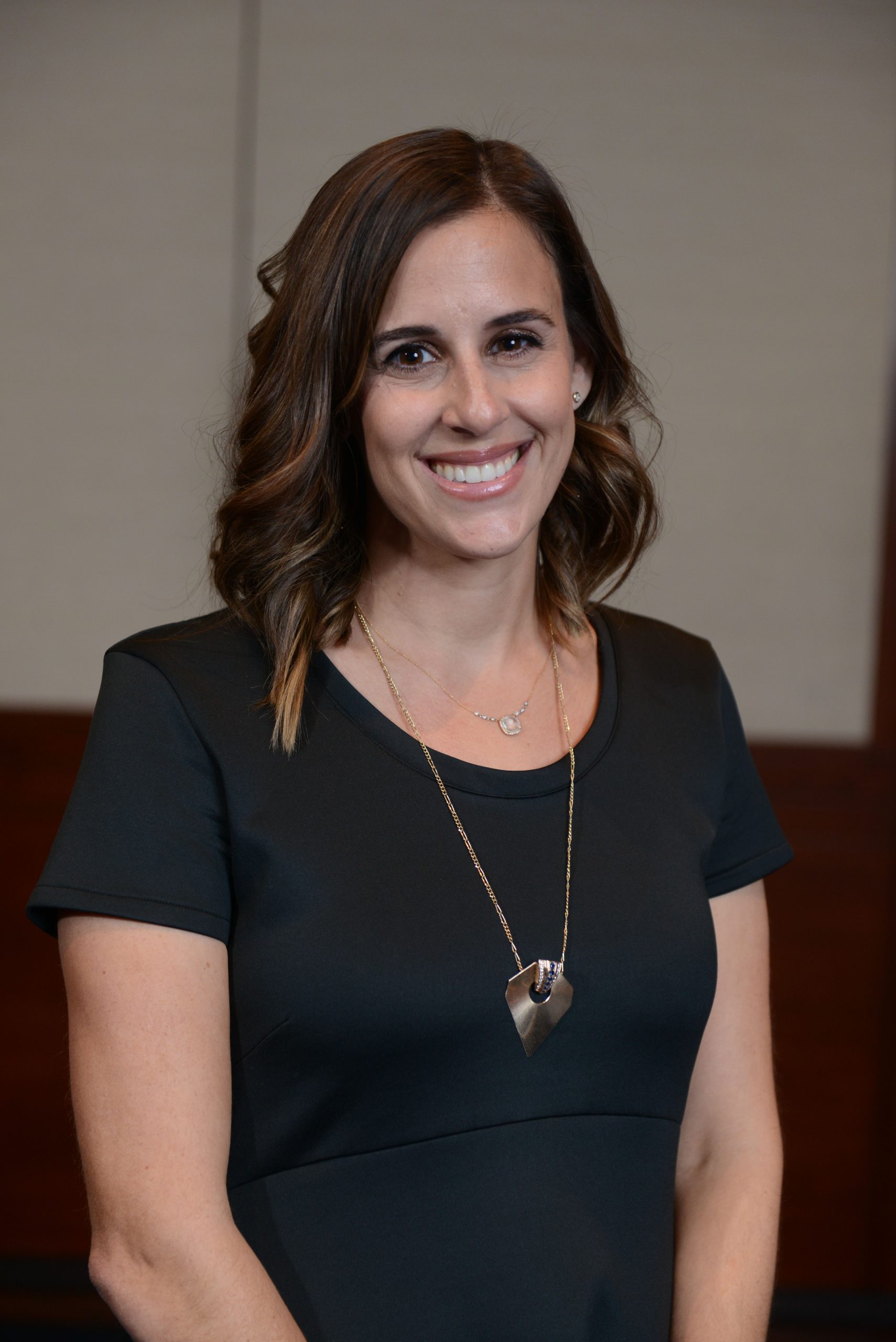
In Na’amit Sturm Nagel’s impressive career, one literary moment has led to another.
For more than a decade, she worked on developing a high school course on American Jewish Literature and Identity, and piloted the year-long course for seniors at Shalhevet High School, a Modern Orthodox school in Los Angeles. She taught the course — which was in high demand among the students — for six years. Under her guidance, students reading deeply and thought rigorously about Jewish literature and about Jewish identity. The course spun out to a mini-series for adults and then to a book club and special book-related cultural events.
Sturm Nagel has recently taken another step with this work, widening her lens, and shifting from teaching to studying. Now in the midst of a doctoral program in English literature at UC Irvine, she is focusing on African-American literature and Asian-American literature, alongside American Jewish literature, with particular attention to gender, generational trauma and relationships to temporality.
At present, she is in Israel, spending the year with her family. They arrived only a few weeks before October 7th and while the war has disrupted her plans to teach, she feels strongly about being there, supporting her four children, ages 3 to 11, in their studies and programs, and aiding in citizen’s volunteer efforts. She misses teaching and especially the opportunity to process difficult times, like these, with students.
While in California, she learned about visioning from a Covenant-organized professional development opportunity led by Kerry Sheldon. After seeing how visioning enables people to use writing to think outside of the limitations of the present and look towards shaping a future, she repeated it with her students at Shalhevet and then with members of her L.A. synagogue during Covid. In Jerusalem, she circulated a flyer announcing an exercise in visioning, and a dozen people signed up.
“I was so happy to use my skills,” she says.
While teaching the year course in high school course, she was able to see the students grow in their understanding and appreciation of literature. Throughout the year they discussed and refined ideas about how to define Jewish literature, moving from a narrow approach to something much wider. About her own definition, she says, “any literature about Jews or written by Jews,” and adds that it is getting broader and broader.
Beginning with Yiddish literature in translation, she covered a wide range of writers, including Cynthia Ozick, Philip Roth, Eva Hoffman, Shulem Deen, Gary Shteyngart and Ilana Kurshan, many of the most important writers of recent times. Sturm Nagel also engaged students in carrying the memory of the Holocaust. In addition to books, she also brought in music, from Broadway to klezmer to Ladino.
The most profound moments in her teaching came from the unit on memoirs, where students were asked to write their own memoir pieces. They came to understand that someone like Shalom Auslander could hate being Jewish and still write a good Jewish story.
She was so moved by “the work students produce when you give them room. I was blown away by the amazing stories they wrote. They were so proud to write them and share them — and some went on to publish them.” One student wrote about eating bacon for the first time while visiting a college and the happiness of that moment – the student had the ability to process that feeling, without feeling guilt. Another wrote about the horrific experience of not being allowed to speak about her beloved non-Jewish stepmother in a different school she attended. Here she was able to talk about it and process it.
Sturm Nagel is proud that some students have gone on to study Jewish literature. She recalls that one student who never heard of klezmer music until her class went on to Brown where he joined a klezmer band and later became a klezmer musician.
Parents of students in her class were eager to read and discuss the books too. Before the pandemic, she served as associate director of the Shalhevet Institute, organizing classes, an author series and other events for the wider school community. As an outgrowth of her course for high school seniors, she facilitated a book club for adults focusing on memoirs at the Skirball Cultural Center.
When asked about a particular moment that sparked her new direction in her work, she recalls that at one event, someone mentioned that Toni Morrison’s “Beloved” was their favorite Jewish book. That inspired Sturn-Nagel to think about teaching that book alongside the work of Cynthia Ozick, one of her favorite writers.
“A lot of the cross currents are fascinating to me. How do we see minorities as connected to each other? I was thinking of the attachment to history and the suffering and trauma in “Beloved,” she says. “The especially complicated relationship to memory gets distorted or reworked. You see that in Holocaust literature, that reinventing memory can be healing. That got me thinking about people recovering from slavery in relation to Jewish life.”
“I have also found myself looking at other modern literature through the lens of midrash,” she says. Midrash has a way of expanding on difficult parts of the Bible to uncover meaning and help us understand them, and Sturm Nagel noticed that many contemporary writers use tools similar to those of a midrashist when exposing or attempting to comprehend complicated characters or stories.
About the Pomegranate Prize, she says, “The prize gave me the courage to go back to school and get my doctorate. I wanted to think more and do more and didn’t have the time. I thought that my work could get so much richer, that what I’d produce would be much stronger.”
“The confidence that the Covenant Foundation had in me enabled me to keep trying and to start something new. The way the Foundation operates is that they treat you like you are someone important. In Jewish education no one gives teachers that same level of kavod.”
At UC Irvine, she has taught courses in freshman composition, with 10-week semesters rather than the luxury of a full-year in high school. She enjoys teaching classes of non-Jews – a totally different population than Shalhevet — which has been important for her.
The granddaughter of four Holocaust survivors, Sturm-Nagel spent six months in Hungary volunteering for the American Jewish Joint Distribution Committee (JDC, or more familiarly, the Joint), along with her husband. It was a life-changing year for them, she says. “I was always deeply connected to Jewish history, and this broadened my sense of Judaism.” She spent time visiting the places where her grandparents were from and during Covid, she spent time interviewing her German grandmother about her experience. Her grandmother passed away a few years ago and, thanks to Covenant funding, she was more recently able to visit and interview a great-uncle in England who is in his 90s who filled out some of the details missing from her grandmother’s interviews. Her plan is to do some writing about this, reflecting on themes of Jewish history, memory and trauma.
Sturm-Nagel has also organized essay writing workshops for high school students as part of UCLA’s Writing Project. For the UCLA public schools, she has helped consult about Jewish literary texts that can be taught alongside other minority American texts, and for the JEIC she organized a database of Jewish literature that is organized thematically and initiated a project to look at American Jewish literature through a gendered lens. Other related literary work includes writing essays and book reviews for The Los Angeles Review of Books, Moment Magazine, The Forward, Lehrhaus, The Jewish Journal, and Kveller.
Ever upbeat in conversation with high energy and lots of creative ideas, Sturm-Nagel plans to keep working in her ever-widening field of American Jewish literature after she earns her doctorate.
“There are a few routes my career might take – it all depends on where my family wants to be. I hope to be able to do something bigger in academia, and still find room to teach high school students. Right now I’m enjoying the creative process — thinking, writing, reading and teaching.”