
Beverly Socher-Lerner
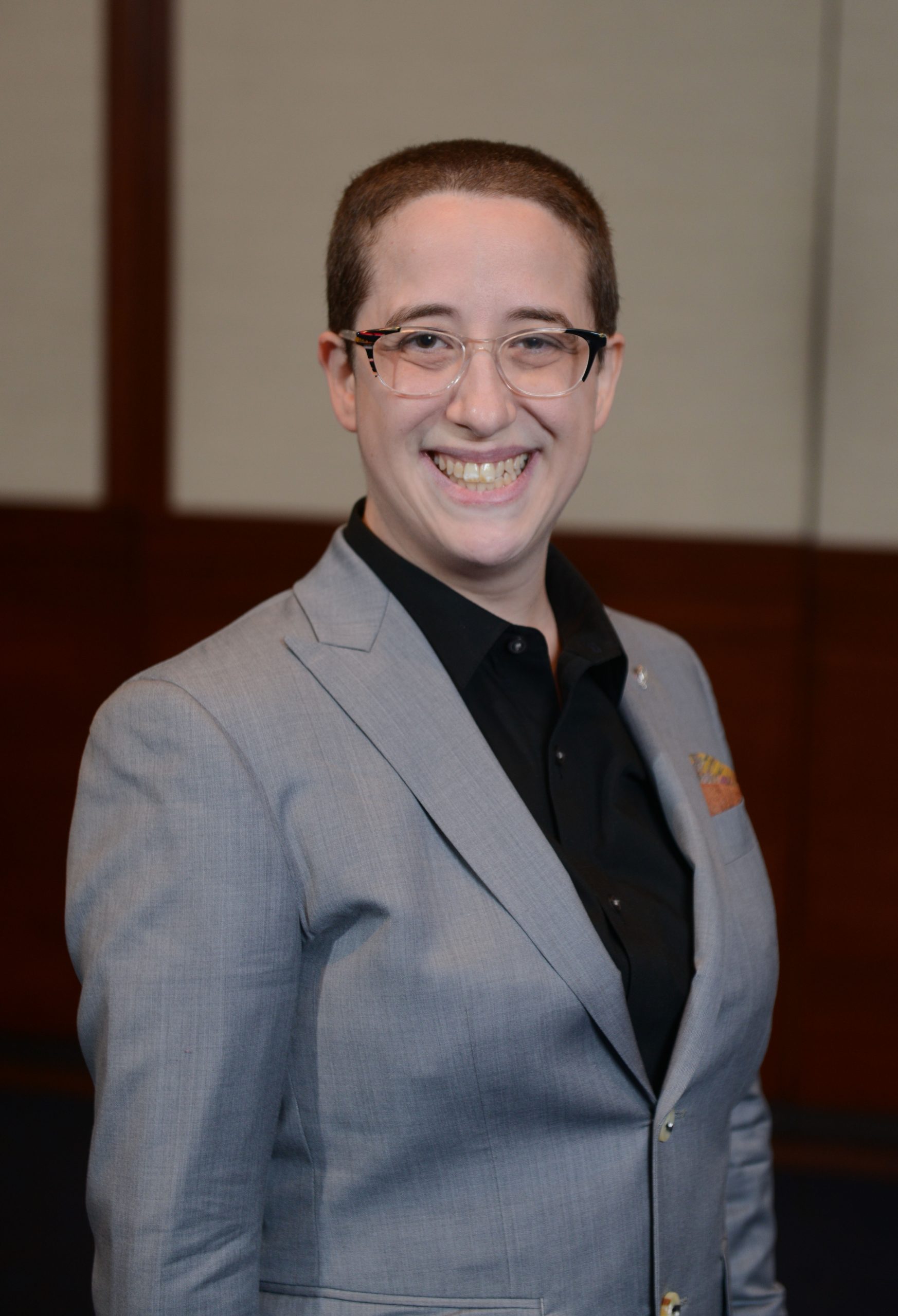
On an early morning just before Chanukah last year, Beverly Socher-Lerner and a colleague arrived to the storefront location of their afterschool Jewish studies program, Makom Community, in Center City, Philadelphia, to find graffiti across their front windows. In bold letters, someone scrawled, “Free Palestine.”
Almost immediately, workers in the seafood restaurant next door offered to help, to scrub the windows clean. Meanwhile, a board member rushed downtown with a power washer. Neighbors and store owners – many the Makom staff hadn’t known previously – showed up to assist.
Parents left their offices to help paint and hang signs on the inside and outside of the space, “We all deserve peace and safety. Happy Chanukah. Let your light shine.” They also, of course, brought food.
That Socher-Lerner, a 2018 Pomegranate Prize recipient, was able to see this incident as a learning experience and draw positive lessons from it is their way.
When the students arrived, staff members met the “kiddos,” as they refer to their student participants, a block away and told them about the graffiti and the parents’ signs. They then led discussions, aimed at different age groups, about big issues: Using violent language, feelings about Israel and Zionism in the community, safety, all framed in the story of Chanukah and resilience.
Socher-Lerner says that later in the day, a first grader “responded in such a deeply empathetic, Makom way when she asked, ‘Why did they have to do THAT with their big feelings? Couldn’t they have done something productive?’”
Founded by Socher-Lerner in 2014, Makom Community welcomes kids of all backgrounds. The learning is text-based, with an approach that is joyful and accessible.
“Makom means place,” they say. “In the Torah, when you hear about a makom, it’s the place where a person becomes the next iteration of themselves. Kids, parents and educators alike get to become who we are meant to be. Torah is our guide to get there.”
When they began Makom Community, they served four kids in a church basement, and now, in their own space, they have 70 students, with 8 full-time and 6 part-time staff members. The kids can attend between two and five days per week. In addition, Makom Community hosts Shabbat services bimonthly on Friday evenings and quarterly Shabbat dinners, engaging the families as well. Next year, Socher-Lerner would like to get to 100 students, but that’s as large as they’d like to grow.
At the center of their work is an innovative methodology called Jewish Placemaking, which they describe as “a pedagogy that invites text, people and places to all shape each other.”
The inspiration,” Socher-Lerner explains, “came from years of teaching and watching the really significant difference when we invite the Jewish texts we study into the physical and relational space, asking parents and kids to explore what it would mean for this text to show up in our lives, be reflected in what’s on the walls, how we treat each other and even how the furniture is arranged.
Socher-Lerner, who previously ran congregational schools in Maryland and New Jersey and has been a fellow at Yeshivat Hadar, a Shalom Hartman Created Equal Fellow and is a graduate of the Mandel Foundation Executive Leadership Program, is now extending the reach of Makom, introducing their pedagogy, Jewish Placemaking, to talented and driven Jewish educational leaders across the field of Jewish Education.
“The dream is about creating high quality Jewish education in Philadelphia and continuing to do research and data collection, so that we can distill and share our pedagogy with others involved in Jewish education. Not limited to afternoon schools, but day schools, camps and family education. I am excited to continue to push what Jewish placemaking can offer the field of Jewish education.”
When asked about the through line that runs through all of her work, they say, “For me, it’s about creating access to Jewish texts and Jewish wisdom. I come at this from a place of knowing in my kishkes that every person deserves that access. I understand how it can enrich their lives.”
At Makom Community, the students range from pre-kindergarten to 7th grade. Most of the kids go to public, charter or private secular schools. The majority (70%) come from families not at all in touch with the Jewish community, and the others are very involved in the community; some parents are synagogue presidents and clergy.
How do they mix?
“Seamlessly, amazing,” they say. “The families see the value we bring to their lives through the study of Jewish texts. Our learners have deep empathy, even coming from different backgrounds.”
They describe an especially powerful moment, before the pandemic, when they hosted a family Shabbat service and dinner. After the dinner, when the kids went to do an activity, Socher-Lerner studied a piece of text with the parents, diving deep into the text.
“I was the only in the room who knew which parents had a Jewish education or not, who was Jewish or not. I saw that I bridged a gap. Where many have had hurtful experiences with Jewish education in other spaces, I was engaging them in applying a shared experience of Jewish learning to their parenting. There was equal access across a huge range of Jewish learning backgrounds.
Makom Community is open to people of all backgrounds. In fact, one year, they had a family of Japanese Buddhist join them. The parents were visiting professors and wanted their kids to learn about Judaism.
“The kids were eager learners. To my mind, it’s win for the world. The kids go back to Japan with an understanding of Jewish life. Being open to all saves me as an educator from the agony of weighing in on who is Jewish. If you are eager to come and learn, we would love to have you.”
Throughout their career, Socher-Lerner has been designing curriculum and building out their unique pedagogy. They understand that they are educating a generation of Jewish students and families with near-constant access to the internet. “We don’t need to prioritize for them to learn the names of Jacob’s brothers and other factoids. We have to prioritize how the learning is applied to their lives and practice.”
Last November, when Socher-Lerner walked into the Covenant Awards dinner, they recalled feeling so different from the first year they attended, as a winner, but not knowing anyone. Now, they feel confident, pleased to know so many innovative educators in the field. They express much gratitude for the many introductions made by the Covenant staff, who helped them see themself as someone who could impact Jewish education. As for the network of Pomegranate winners, they are “the greatest gift of all.”
“No problem is so big that a networked approach can’t get you through it. There’s not a barrier that I’m going to encounter where I can’t find resources and connections and networks.
Because of the Foundation, I’ve been able to shift my work and my thinking from How do I serve a relatively small number, to thinking that we can have a lasting impact on the field. I could not have been so bold without the network or without the Covenant Foundation.”