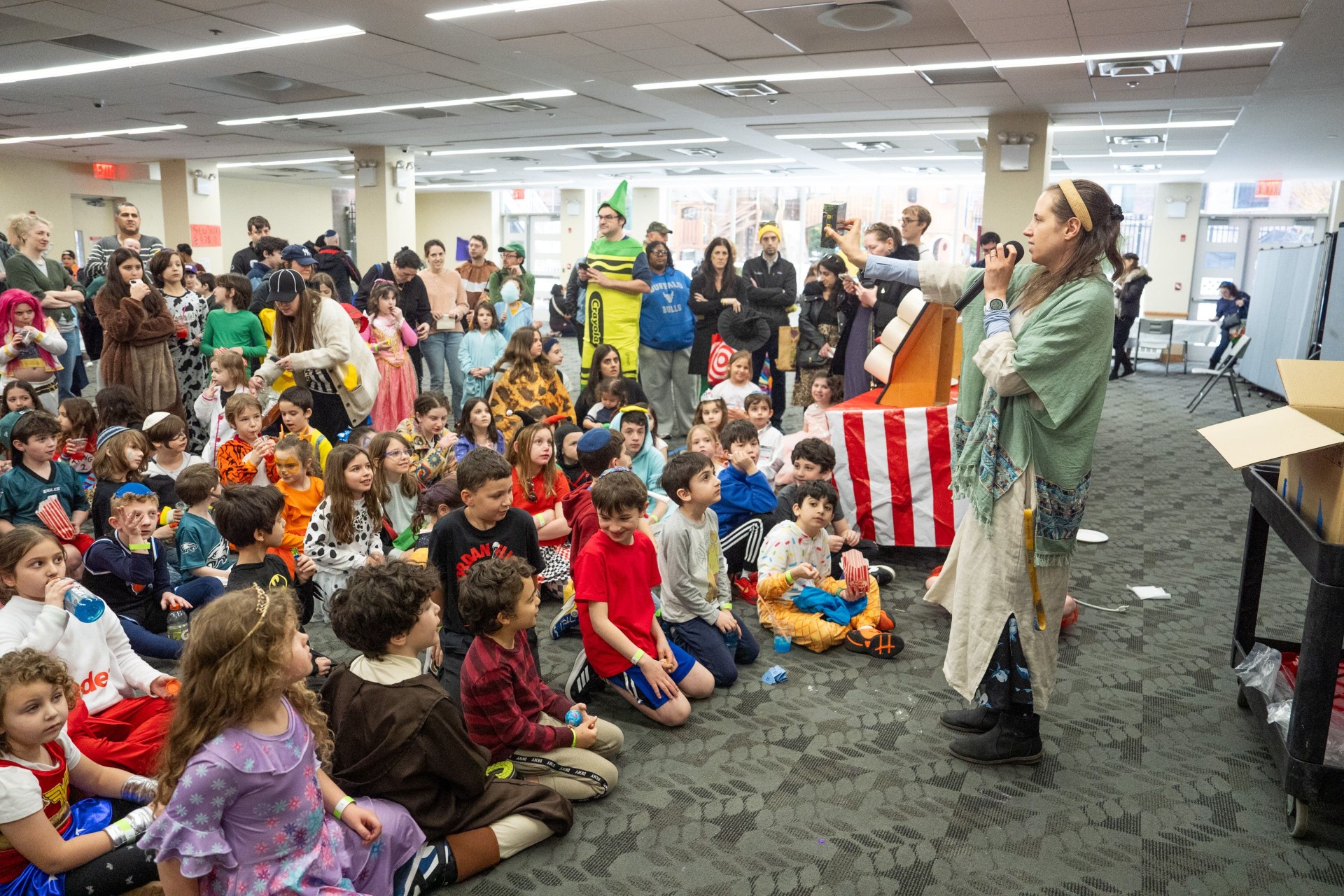
Rabbi Yali Szulanski serves as the director of youth and family engagement at the Hebrew Institute of Riverdale, where she empowers teen leaders through innovative training programs that foster empathy and inclusive leadership, and offers guidance, care, and connection to families. Yali also served as the social-emotional learning specialist and a guidance counselor at SAR Academy for five years, where she integrated mindfulness and emotional wellness into student guidance. Yali founded the “I Am” Project and The Neshima Initiative, through which she brings emotional wellness and resilience practices to schools, camps, and community organizations nationwide and internationally. She earned her Rabbinic Ordination from Yeshivat Maharat. She also holds an MA in Psychology and Education from Columbia University’s Teachers College, where she earned a certificate in Spirituality-Mind-Body Integration in Education, and holds a BA in Psychology from NYU.
The Covenant Foundation: Since receiving the 2025 Pomegranate Prize, how have you expanded your work in supporting healing and belonging within the Jewish community?
Yali Szulanski: I have been expanding these pathways in a few key ways. I began working as a spiritual counselor and rabbi with individuals and families navigating substance use, mental illness, eating disorders, and recovery.
This work has grown beautifully through my partnership with 14Y Selah, where I provide spiritual counseling, lead community Shabbatonim, and facilitate a new monthly workshop called In Conversation. Each of these gatherings enters into dialogue with the teachings of a great rabbi, beginning with Abraham Joshua Heschel and the practice of radical amazement.
Beyond counseling, I have completed training with K’ilu Lab and GrowTorah’s Anafim program, bringing new experiential and nature-based approaches to my programming at the Hebrew Institute of Riverdale. I am also developing a teen leadership lab to make my teen-training model available to other synagogues and the adults who work alongside them.
The Covenant Foundation: For those who might not be familiar, can you share what 14Y Selah is, and give an example or two of the healing practices you bring to that community?
YS: 14Y Selah is a participation-celebrated, perfection-averse, everyone-welcome Jewish community for people in addiction recovery, the “recovery-curious,” and those who love them. Based at the 14th Street Y in New York City, it brings Jewish spiritual tradition and recovery into conversation through support groups, individual counseling, Shabbat dinners, ecstatic dance, and holiday gatherings. It is a space where people can arrive exactly as they are and discover belonging without needing to hide the complicated parts of their lives.
In my work with them and other communities, I introduce two core healing practices:
- Somatic Grounding: Helping people return to the body through breath, movement, presence, and grounding. When navigating recovery, mental illness, chronic pain, or anxiety, the body can feel like a place of fear or disconnection. These practices offer a gentle way back into the present moment to meet what is there with greater compassion. I use these same practices with children in my counseling practice and in my emotional wellbeing work with schools.
- Text and Ritual Integration: Drawing deeply from Jewish text, ritual, storytelling, music, and prayer, I often invite people to encounter a teaching as a question to live with, asking: ”Where does this teaching meet your own experience?” or ”What language does it give you for what you are carrying?” In communal settings, shared reflection, visualization, creative expression, and intentional silence help people feel less alone while creating room for grief and hope to coexist.
The Covenant Foundation: You’ve also been focusing a lot on writing and speaking. Can you tell us about The Concordia Papers?
YS: The Concordia Papers is one of the most exciting developments for me. It is a deeply personal and historical research project where I am exploring my family’s place in the Jewish community of Concordia, Argentina. Through it, I am exploring complex questions of memory, inheritance, and stories that almost disappear.
Alongside this project, I have had the opportunity to write curricula, participate in panels at Limmud, and speak at various synagogues about the intersections of narrative and Jewish life.
The Covenant Foundation: Are the curricula you’ve written related to this family history work, or do they focus on a different area?
YS: The curricula I wrote with Moving Traditions are separate from my family-history work.
That work focuses on mother/daughter programs built around Jewish traditions, wisdom, and practice. The curriculum is designed to help young people engage with questions of identity and relationship—especially the evolving bond between mothers and daughters as they move through Jewish rites of passage together using shared learning, reflection, and conversation.
The Covenant Foundation: Looking at all these moving parts—from The Concordia Papers to your community counseling, what is the common thread tying your work together?
YS: Across all these projects, I am constantly thinking about how stories, Jewish teachings, and healing practices can reach more people. My goal is to offer people practical, spiritual tools that they can authentically carry into their own everyday lives. That is the work I am most excited to continue developing.
The Covenant Foundation: How did receiving the Pomegranate Prize affect your professional path and goals?
YS: The 2025 recognition gave me space to honestly assess my professional life and ask which parts served my goals, and which parts pulled me away from them. The Prize also let me invest in my written voice. Working with Tiny Windows, I sharpened how my writing presents online, which opened me up to bigger picture thinking about where my path leads in writing, teaching, leadership building, and directing. After winning the prize, I left a job and created more space in my week to take on new consulting and directing projects. In many ways, that decision was an act of trust in the larger path ahead, and the Prize gave me the confidence to make it.
The Covenant Foundation: Can you share a bit about your experience being a part of this Prize cohort?
YS: The best things that came out of the Prize experience have been the mentorship and the camaraderie. Our cohort only met a handful of times as a group, but those gatherings were enough to form real relationships. I feel blessed to have had a year of mentorship from Rabbi Lisa Goldstein, and to be able to delve deeply into what I was working on and working through with her guidance. It is a joy to know that I have colleagues in the field I can reach out to and connect with. I also love being part of the larger Covenant family of Jewish educators who work to innovate in the field and make it better.
Read more from Yali:
When Women Say They Are in Pain, Believe Them | Jofa
This Is How We Rebuild | The Jewish Link
The mothers we become | The Times of Israel
Recovery Isn’t a Finish Line. It’s a Phone That Keeps Ringing. | Substack