ARTICLE Respect and Responsibility: A New Introduction to the Sacred Spaces Study Guide
To accompany this volume of Sight Line, we’re highlighting a 2021 Covenant Signature grantee, Sacred Spaces, and learning more about the outcome of their 2021 grant: the development and distribution of a study guide on how Jewish ethics informs abuse prevention in Jewish institutions.
In the article below, Rabbi Lev Meirowitz Nelson, director of scholarship, introduces the research Sacred Spaces conducted to compile their guide. He provides the methodology for approaching such a difficult topic with resources by the Jewish educators and community leaders who were a part of the project. Through their scholarship, Sacred Spaces has created a foundation on which Jewish communal organizations may build safety, respect, and establish abuse prevention in Jewish institutions.
-Adina Kay-Gross, Director of Thought Leadership, The Covenant Foundation
By Lev Meirowitz Nelson
When we ground Jewish action deeply in text or theology, we give it roots. We enable it to absorb hard-earned wisdom from past generations and give it more staying power.
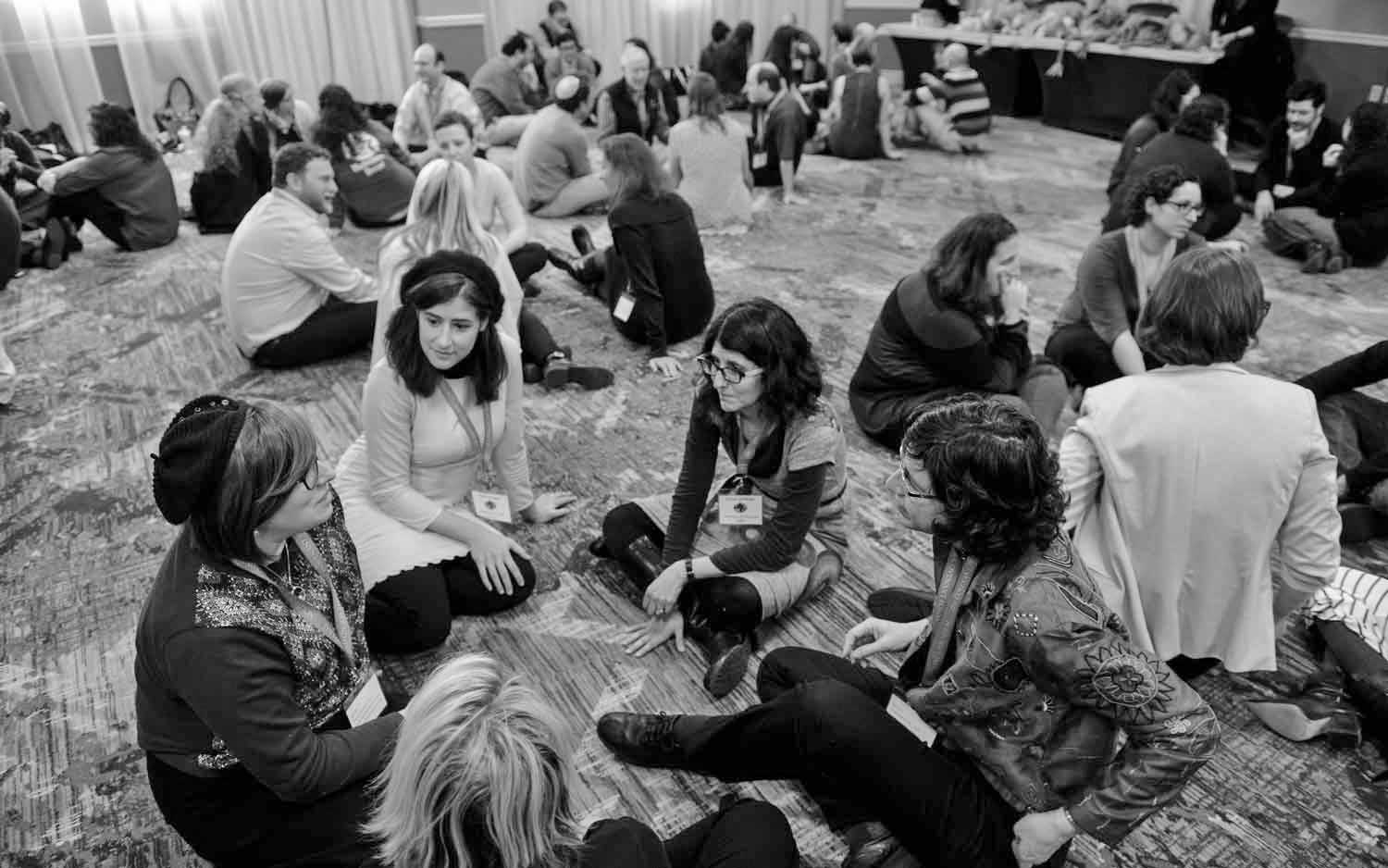
That’s what Sacred Spaces sought to do when, beginning in 2017, we partnered with The Center for Jewish Ethics to produce a study guide that would bring the work of abuse prevention and response into the context of the beit midrash. In 2022, the Covenant Foundation supported three cohorts of educators in studying these texts to bring conversations about safety into their communities. We trained 32 educators, spread geographically across the country and religiously across Jewish movements, to address abuse prevention. The project’s core goal is simple and actionable: culture change starts with shared values, shared language, and supportive structures that make hard conversations possible and sustainable.
With the three cohorts complete, Respect and Responsibility enters a new life stage. The teaching materials created by those 32 educators are available online, as is the guide itself. This introduction aims to guide users by offering a framework for approaching this rich content. Three organizing themes emerge from Respect and Responsibility: preparing oneself to enter an ethical quandary, what makes Jewish ethics Jewish, and how we implement Jewish ethics in our institutions.
How we enter
Respect and Responsibility begins with articles and poems that help a reader enter into this topic in a healthy, productive, spiritually aware manner. Rabbi Jessica Rosenberg provides an essential starting point, reminding us to be trauma-informed and stay cognizant of the impact the topic has on us as learners. Dr. Hadar Schwartz introduces us to the concept of spiritual injury and how it tends to show up for Jewish survivors of abuse. Dr. Shira Epstein broadens the lens from self to institution and invites us to deepen our awareness of how power is distributed in a community.
Following in the path laid out by Rabbi Rosenberg and Dr. Schwartz, several poems/prayers remind us to tend to our spiritual sides as we work. In addition to two contemporary pieces, we include a brief “Prayer for Weighty Discussion” from the Talmud, which the 1st-2nd century Rabbi Nehunya ben Hakana recited every time he entered his house of study. This is a reminder that poetic phrasings and creative appeals to God have deep roots in our tradition that can continue to birth new, modern expressions. These lenses of trauma-informed self-care, spirituality, and organizational behavior attune us to the lasting impact of abuse and prepare us to move into the next section of this guide.
What makes it Jewish
What constitutes a Jewish value is a matter of some debate. The faculty at M2: The Institute for Experiential Jewish Education offer the following schema: There are universal values whose name (e.g., justice) constitutes a “thin” expression of the value, which means different things to different communities. That universal value becomes Jewish by a process they call “thickening”: articulating the value using a series of Jewish reference points to show its profound connection to Jewish content. These could include key Jewish texts that teach the value, practices that bring it to life, or contexts in which the value appears. Sometimes placing a Jewish law or concept into an unfamiliar context can offer new insights–not just language but specific ideas for action steps. Even for Jews who do not follow Jewish law, these particular teachings can offer a helpful conceptual framework for action. While the study guide does not use M2’s terminology, six articles are examples of just such a thickening process: Rabbi Yosef Blau on teshuvah (repentance), Rabbi Rachael Bregman on justice, Rabbi Steven Exler and Sacred Spaces’ own Dr. Shira Berkovits on transparency, Rabbi Dr. Matthew Goldstone and Rabbi Dr. Mira Wasserman on rebuke, Asher Lovy on harm, and Dr. Sharon Weiss-Greenberg and Rabbi Susan Fendrick on yichud (seclusion). Together, these articles examine how thick expressions of Jewish values can guide our ethics processes.
But articulating values and frameworks is not the final step. Our most difficult ethical challenges do not usually exist in the clear definitions but in the gray areas, in the places where two firmly held values conflict and where challenges don’t have simple or obvious answers. For such instances, Jewish texts offer case studies, enabling us to explore multiple perspectives. Professor Marjorie Lehman guides us through a rabbinic story about violence in the Temple where the priests prioritized the institution over the welfare of the people within it. Read her article in dialogue with Rabbi Bregman’s (above) for a multifaceted engagement with this tension. Judy Klitsner, Sacred Spaces’ founding board chair, and Dr. Elana Stein Hain lead readers through biblical and Talmudic interpretations of the story of David and Batsheva, exploring a multifaceted story of sexual assault, abuse of power, and teshuvah. The stories carry a clear warning but also offer nuance to unpack beneath the surface.
What makes it work
As so much of the Respect and Responsibility guide emphasizes, most forms of abuse are about power at their core. Therefore, we protect our communities by offering clarity and structure around power imbalances. Shira Hecht-Koller and Dr. Aaron Koller draw on the archaeology of ancient Israel to demonstrate how architecture and physical layout shape our relationships to power: who is empowered, disempowered, protected, and at risk. Rabbi Mary Zamore and Sharon Levin, LCSW both draw on the concept of covenant to help people create guardrails. Rabbi Jeffrey Fox’s article on consent and power draws in part on the famous Talmudic text from Shabbat 88a about God holding Mt. Sinai over the heads of the Jewish people and requiring them to accept the Torah. This demonstrates that consent should permeate all aspects of our lives, not just sex.
Safeguarding matters across the lifespan, and should begin from the earliest ages, with our most vulnerable population–children. Rabbi Yitzchak Blau warns about the dangers of charisma in school systems and emphasizes that even “superstar” teachers must be screened and supervised. Asher Lovy, in his second contribution to the guide, teaches how pikuach nefesh (saving a life) should guide our approach to safeguarding children. Finally, Rabbi David Ingber returns to the opening chapters of Genesis to remind us of our fundamental moral responsibility for children.
Conclusion
When we study, teach, and discuss safeguarding through Jewish texts and lenses, we build a culture where safeguarding is an essential part of who we are as a community and as a people. Jewish texts can connect with our intellect, with our communal narrative and purpose, with our feelings, and with our spirituality. They can help us enter into ethical quagmires mindfully, find the uniquely Jewish way through the difficulty, and come out the other side effectively. Our hope is that Respect and Responsibility helps communities on that journey to increasing safety for every individual.
Rabbi Lev Meirowitz Nelson is director of scholarship at Sacred Spaces, which builds healthy Jewish communities by partnering with Jewish institutions to prevent and respond to sexual abuse and other abuses of power. He was a recipient of the Covenant Foundation’s Pomegranate Prize in 2017.

Latest Volumes
Past Volumes














Built On the Roots of Tradition: New Models in Jewish Supplementary Education