2020 Pomegranate Prize Recipient
Rachel Isaacs
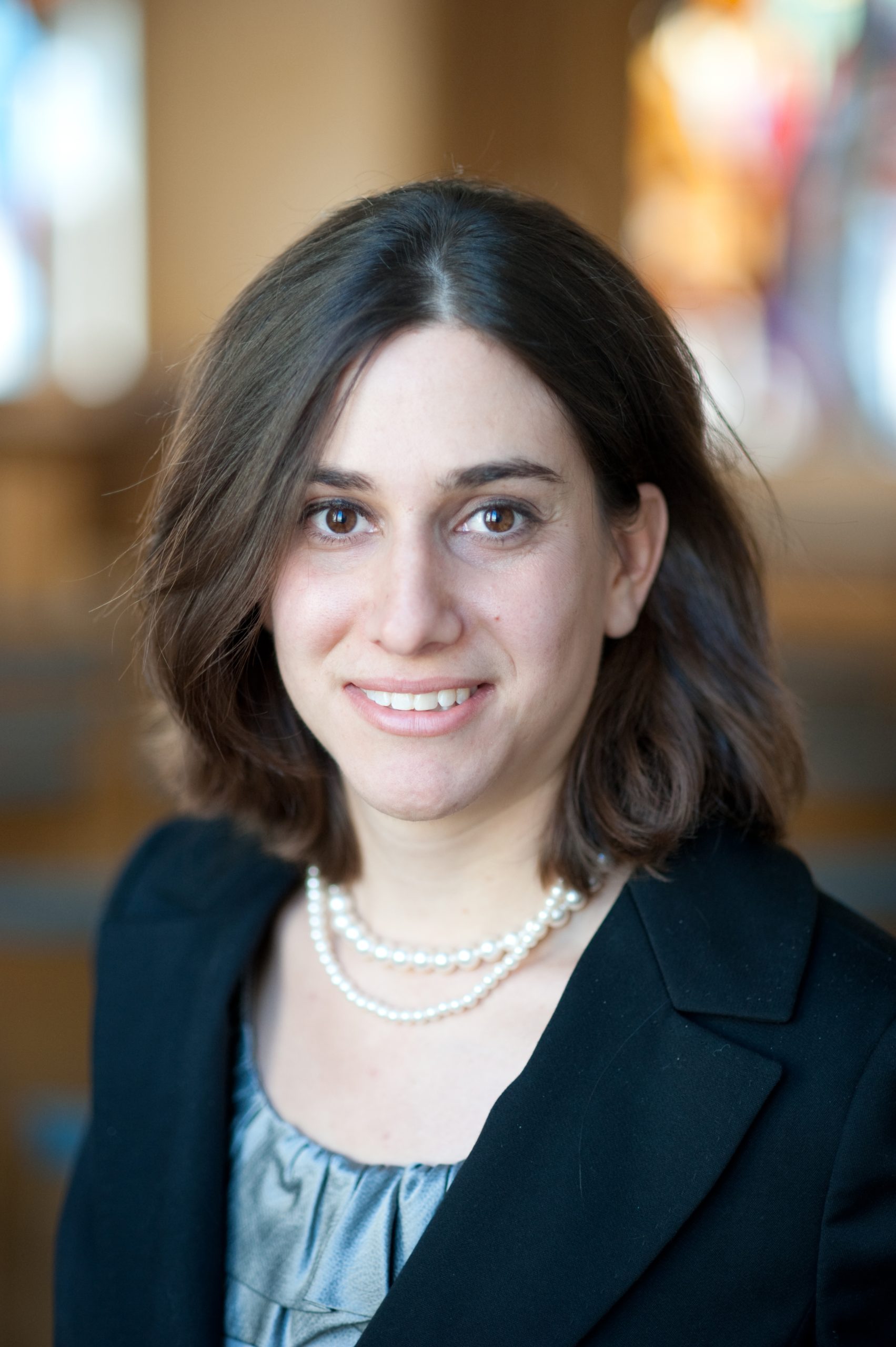
Rabbi Rachel Isaacs enjoys growing potatoes in the garden at her home in Waterville, Maine. She favors pinto golds, strawberry reds and Kennebecs. Before moving to Maine 13 years ago, she had so idea there were so many different types of potatoes that taste and feel differently.
“I’ll never be a Mainer. I wasn’t born here. But living in Maine has taught me a lot about gardening, family, religion, working with my hands. Being connected to the land and making the most of everything,” she says.
On the spring day that we speak, she describes the setting as gorgeous. “What a blessing it is to be here.”
Her substack is called, appropriately, Small Potatoes: Digging Deeper into Faith – where she writes regularly about Jewish thought and Jewish texts, about seeing the extraordinary and the spiritual in the ordinary moments of daily life. Her lens is small town Jewish life; she says she has a special sensitivity to what it means to be on the periphery.
Rabbi Isaacs serves as spiritual leader of Beth Israel Congregation in Waterville, Maine and is the inaugural holder of the Dorothy “Bibby” Levine Alfond Chair in Jewish Studies at Colby College. She is also founder and executive director of the Center for Small Town Jewish Life at Colby College, a groundbreaking institution committed to supporting small town and rural Jewish communities.
As she explains in a recent substack post, “When I talk about what makes small town Jewish life shine, I often discuss the small gifts that add up to make a functional and beautiful community. It’s the mac and cheese, the kugel, the homemade challah, and wiping down the tables after services even though it “isn’t your job.”
She continues, “There is a tangible difference between small town Jewish life and what many of us grew up with in major metropolitan areas. Everyone needs to pitch in, and nothing is ever exactly how you want it — not everyone will agree with your politics, not everyone will agree with how the shul should be run, things are usually a day late and dollar short, and nothing is ever perfect. But for those of us committed to small town Jewish life, the synagogue is home, and you keep the lights on and the front yard clean.”
In addition to her synagogue duties, she teaches Torah in small towns around the state of Maine, as well as to Colby students. She also teaches Hebrew and fundamentals of leadership. Her synagogue works closely with Colby and the Center for Small Town Jewish Life to build community.
“It’s all part of what I do,” she says.
And a large component of her teaching is writing, and she has found a distinctive voice. She used the funding from her Pomegranate award to hire a writing coach, and is working on a series of essays, possible a memoir, about being a small town rabbi. She also went to Israel to study at the Hartman Institute on a couple of occasions. She hopes to continue writing on issues in rural American and academic life.
Rabbi Isaacs made history in 2011 as the first openly lesbian rabbi admitted and ordained by the Jewish Theological Seminary, the Conservative movement’s flagship institution. In 2014, she was named one of “America’s Most Inspiring Rabbis,” by The Forward and in 2016, she was invited to offer the final Hanukkah benediction of the Obama administration.
“It’s nice to be connected with other people working day and night to serve the Jewish people,” she says, of the relationships she was built with other Pomegranate recipients. “Especially this year, a very particular and difficult Jewish experience.”
Born and raised in central New Jersey, she recalls that she always loved synagogue as a child and was involved in her synagogue in Monmouth County from a young age. She credits her close connection with the rabbi and cantor of her family’s synagogue with her decision to pursue rabbinic studies. Before beginning JTS, she spent one semester studying at Pardes in Jerusalem and another semester at Alma: The Home for Hebrew Culture in Tel Aviv. While at JTS, she had an internship at Beth Israel Congregation in Waterville.
“I never intended for this to be my rabbinate. But I fell in love with this community and place as a rabbinical student.” She is grateful to the mentorship of Rabbi William Lebeau at JTS, who first suggested her placement at the synagogue.
Now, Rabbi Isaacs lives in a 150 year old turquoise and lavender house in Waterville with her wife, Melanie, and their two daughters.
She has close relations with the other clergy in town, and their social justice initiatives are integrated. Among her Colby students, one has gone on to rabbinical school, and another went into Jewish communal work; two students from the synagogue community are planning to make Aliyah in the next two years.
“Part of the reason that kids from our community stay actively involved in Jewish life is because they have become accustomed to working for Jewish community and Jewish life – they don’t take it for granted. Here, it’s something you have to fight for. And the things that you have to work for and fight for are the things that become precious,” she says.
Her vision for small town Jewish life is for Jews in small towns to have same access to education and quality leadership. She believes that it’s good for small towns to have Jewish communities, and it’s good to make sure that these communities are vital and well served.
Through the Center for Small Town Jewish Life, she is working to help synagogues of all denominations that are in danger of closing for lack of support, trying to provide them with the training and resources to thrive.
“Small town America is struggling, and yet with Covid and climate change, a lot of people are returning to small towns. Maine has seen its population increase over the last ten years. There is a cyclical nature to the American story. We want to be ready when people return.”
Looking ahead, she says, “The welfare of the Jewish people is linked to the welfare of American democracy. We can’t view those stories as separate from each other. I’m in a purple state and on a college campus, and we get to see the struggles that are going to define the future of our country very clearly.”