ARTICLE Dialogue Across Difference: A Vital Tool for Jewish Community and Beyond
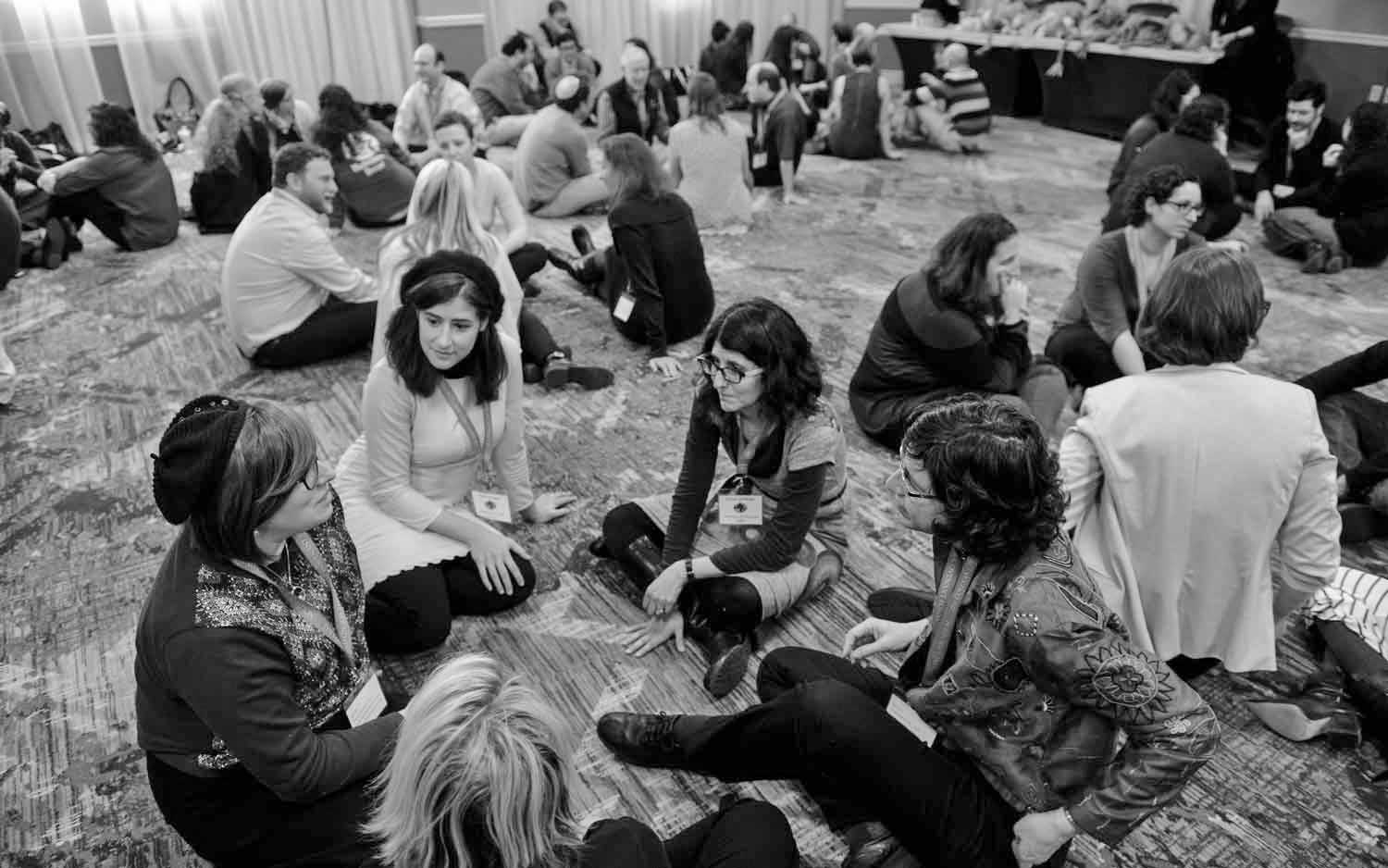
Dialogue Across Difference is a structured, intentional approach to cultivating empathy, understanding, and connection among people with deeply different perspectives. Rather than prioritizing debate or persuasion, Dialogue Across Difference equips participants with the skills to navigate polarizing issues, strengthen civil discourse, and build resilient communities.
Recognizing the growing urgency of this work, The Covenant Foundation has invested in dialogue across difference for several years. We know this work is vital to the health of Jewish life and the broader society. Through concrete training in dialogic methodologies, we aim to support and strengthen the field of Jewish practitioners devoted to this work, foster collaboration among professionals, and expand the capacity to train others—bringing the importance of dialogue across difference into sharper focus across our communities.
To that end, and to reflect the breadth of this growing movement, we have chosen to highlight eight Jewish organizations and leaders that engage in dialogue work in diverse and meaningful ways; below are short descriptions of their work and their hopes for future collaboration. Together, they demonstrate that this work extends far beyond the most “obvious” actors, and that building understanding across difference is a responsibility—and opportunity—for everyone.
Rekindle
Matt Fieldman, Co-Founder and Executive Director 
“Rekindle is a Black–Jewish dialogue and leadership program that brings Black and Jewish leaders together for 15 hours of structured, face-to-face conversation and shared action. Since 2021, we’ve graduated over 300 Fellows across 25 cohorts in nearly 20 U.S. cities, with 250+ people on the waitlist and 50+ alumni-led projects. I serve as Co-Founder and Executive Director, supporting local chapters, stewarding partners, and holding the container for courageous, caring conversation.
For us, dialogue across difference is not a warm-up to “real” work—it is the trust-building foundational work that underpins allyship and collaboration. When Black and Jewish participants sit together to wrestle with antisemitism, racism, power, and faith, they humanize one another and build the trust required for sustained joint action. Our surveys show that 96% of Fellows would recommend Rekindle to a friend, 93% have made a new friend in the other community, and 95% feel newly empowered to address hate.
In the Jewish community, I’d love to help normalize rigorous, text-rooted, interfaith conversations that include a truly diverse range of Jewish, Black, and Black Jewish voices at the same table. Through our proven curriculum, reading guide that draws from a wide range of sources, facilitator training, and national network of chapters, we can help seed and support local Chapters that leverage meaningful dialogue to inspire real-world collaboration. I’m especially excited to collaborate with rabbis, JCRCs, day schools, Hillels, and Black faith leaders who are ready to model this kind of transformative dialogue together.”
A More Perfect Union
Jeremy Bannett, Vice President, Programs and Partnerships 
“A More Perfect Union is a nonpartisan social-impact organization that mobilizes the American Jewish community to protect and strengthen democracy. As Vice President of Programs and Partnerships, I lead the Jewish Partnership for Democracy (JPD), a network of diverse Jewish organizations committed to revitalizing civic life in their communities.
Dialogue across difference is central to a healthy democracy. The free exchange of ideas is only possible when people have the knowledge, skills, and dispositions to engage constructively with those who disagree with them. This is also a Jewish value – our sages teach us to pursue mahloket l’shem shamayim, argument for the sake of Heaven. The alternative to a society capable of constructive disagreement is one that defaults to division, oppression, or violence – conditions under which the Jewish people have never thrived.
For this reason, dialogue is a core pillar of our work. Every JPD partner affirms our nonpartisan Democracy Principles, including a commitment to resolve differences through respectful deliberation and debate and to firmly oppose political violence.
To bring this commitment to life, we provide partners with skills training led by experts including Pardes and the Constructive Dialogue Institute; offer a curated resource library through our Digital Hub; and elevate successful models of civic dialogue through microgrants, stipends, and “Steal This!” project playbooks.
We hope to convene our full network – and other allies across the Jewish community – for deeper in-person training and relationship-building, and opportunities to practice the hard work of pluralism.”
Ammud
Alexandra Corwin, Executive Director 
“When Rabbi Yochanan mourned his chevruta Reish Lakish, he recalled the ways Reish Lakish disagreed with him, saying that when they challenged each other “the tradition grew wider.” At Ammud, this is part of our vision of making Jewish communities and Jewish life more whole through inclusive wisdom and practice. We encourage dialogue across differences because we know that when our learners can voice the different experiences that shape their understanding of Torah, the entire tradition benefits.
Our learners have diverse racial and ethnic identities and are inheritors of a wide range of regional Jewish customs. They hold differing understandings of Torah and revelation, of G-d, and of what it means to practice Judaism with our fullest selves. What they share is a craving for a space where their fullest selves can be used to interpret Torah. And, at Ammud, it is critical to our mission that our participants engage in dialogue across differences. So, we consider it holy when they disagree about a text, or even with a text.
Our Culturally-Sustaining Torah Methodology empowers everyone to honor each other’s cultural wisdom while being particular about their own. In this way, we build a space of true chidushim, of new understandings of Torah that are crucial to today’s Jewish community.”
Kirva
David Jaffe, Founder and Director 
“Kirva integrates Jewish spiritual wisdom with the work of social change, making repair of the world a soul-nourishing and joyous practice. We work with Jewish change agents from college-age to older adulthood who are committed to putting into practice Jewish values of chesed/kindness, tzedakah/righteous use of resources and mishpat/social justice. I co-founded Kirva in 2018 and serve as Executive Director.
Dialogue across difference is essential to achieving any lasting social change because differences in perspectives and tactics among individuals and constituencies need to be bridged to do big, important things together. At Kirva, we call on several Jewish spiritual technologies to help people bridge these differences. The soul trait of Savlanut/Forebearance, is one of our favorites. We train people to practice the ancient wisdom of “bearing the burden with the other” to stay in solidarity across disagreement. We also draw on Rebbe Nachman of Breslov’s practice of finding good points in others, even across deep disagreement. Both practices help build the capacity to manage emotional discomfort and stay in relationship in the face of conflict. These practices feature prominently in our new pro-democracy program Fight Like a Mensch.
We would love to see more people in our community, from schools to universities to synagogues and beyond, use these spiritually nourishing and effective tools. We are excited to collaborate with any Jewish organization with social justice as part of their mission that wants to bring specifically Jewish spiritual tools to create dialogue across the difference.”
Kadima Coaching
Tikvah Weiner, CEO 
“Kadima Coaching is a global professional-learning organization dedicated to transforming Jewish education through student-centered learning, meaningful inquiry, and collaborative school change. As CEO, I guide our work across seven countries, over 20 cities, and dozens of schools, helping educators create environments where all students feel seen, capable, and engaged. A core pillar of our approach is equipping teachers with structures that foster deep thinking, empathy, and civic responsibility.
Dialogue—especially dialogue across difference—is essential to that mission. Today’s students are navigating polarization both inside and beyond the Jewish community. Our work helps educators move conversations from zero-sum debate to genuine discourse. We have been training teachers extensively in Socratic Seminars and other protocols that scaffold active listening, perspective-taking, and evidence-based conversation. These structures help students learn to communicate respectfully even when they disagree—skills urgently needed for Jewish communal life.
We are also proud of Foundations of Freedom, which the Covenant Foundation helped seed. The program, now expanded through partnerships with the Rabbi Sacks Legacy, Civic Spirit, and Israel educator Dr. Tal Grinfas-David, compares American and Israeli democracy while cultivating civic engagement, media literacy, and healthy communication habits. In parallel, we are partnering with Unpacked for Educators to strengthen productive dialogue in Israel education, especially around complex contemporary issues.
Looking ahead, we hope to help create a Jewish communal culture where curiosity replaces certainty and where structured dialogue becomes a norm across schools, youth programs, and adult learning. We would welcome opportunities to align our civic-engagement work with A More Perfect Union and to collaborate broadly with educators and community organizations committed to nurturing respectful, productive conversations across differences.”
Ayin Press
Tom Haviv, Executive Director and Co-Founder 
“I’m the co-founder and executive director of Ayin, an independent Jewish publishing platform and interdisciplinary creative studio founded in 2020. Ayin is rooted in Jewish culture and in what we call “emanating outward”—by which we mean available to all. Our work is guided by a deep belief that creativity and culture can help heal and transform the world, charting new pathways for spiritual life and thought while deepening our collective imagination.
At Ayin, we publish books, produce audio and multimedia projects, and convene conversations that place Jewish texts, traditions, and questions in relation to broader cultural, ethical, and planetary concerns. My role sits at the intersection of creative direction and institutional stewardship: creating space for artists and thinkers to take risks, while building the infrastructure that allows their work to circulate widely and with care.
Dialogue is central to this work. Judaism itself is a tradition shaped by argument, interpretation, and relational ethics, and we take that inheritance seriously. We believe in cultivating a shared commons that encourages open questioning, deep inquiry, play, reverie, and principled disagreement, without erasure or flattening of any single voice. As a cultural institution, we aim to listen generously to the communities we serve, honoring the diversity of thought and practice already present.
I’m most excited to help build spaces—both intimate and public—where difficult conversations can unfold slowly and responsibly, supported by ambitious art and storytelling, without predetermined outcomes. This work depends on collaboration, and I’m drawn to partners willing to take creative risks while staying in relationship with those who think differently from them. In the coming year, we’re especially excited to launch Ayin’s Audio platform through new podcasts like Alef Bet and Four Questions, which model this kind of sustained, thoughtful dialogue in practice.”
Exploring The Narrative
Lonnie Firestone, Founder and Co-Director
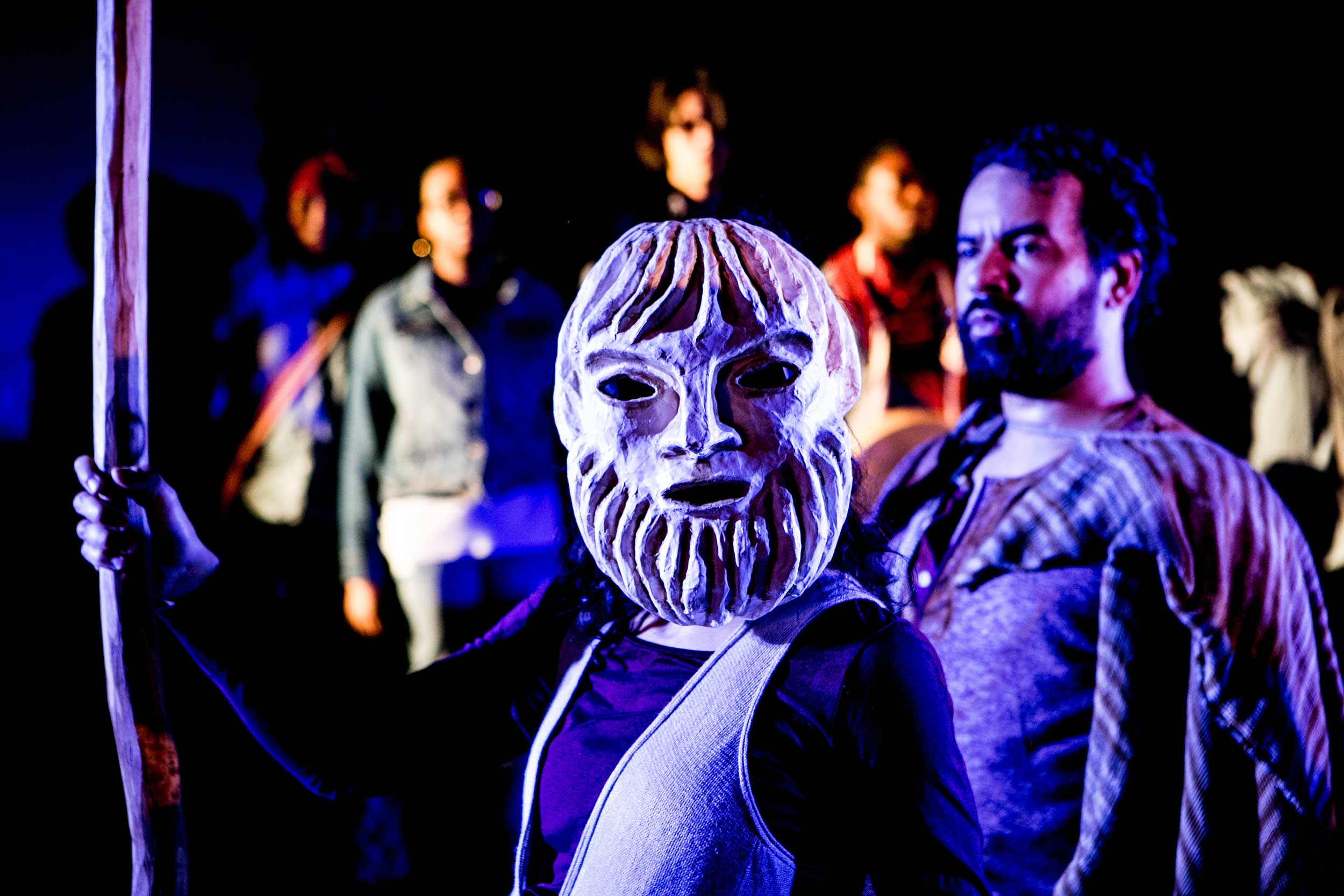
“Exploring The Narrative is a relationship-building organization that utilizes theater, historical text, and the arts to enhance learning across areas of difference. We work primarily with Black communities and Jewish communities, designing programs that serve students, adults, and arts institutions. Essential to this work is the ability to craft conversations with people of diverse backgrounds. Dialogue across difference can sound like a heavy proposition, but it doesn't have to be.
As co-directors, Ron Emile and I model the environment we hope to cultivate by warmly welcoming every learner, delving into texts with enthusiasm, and encouraging open-ended questions. The goal isn't to compete, it's to contemplate. The intention isn't to win, it's to wonder. This framework has been in place for a wide array of ETN's programs. To name just a few: we crafted a culture gallery where 7th graders at two schools displayed their prized cultural items and examined those of other students; we taught key speeches of Dr. Martin Luther King, Jr. and Malcolm X to Jewish day school students through embodied performances; we led an event on Ethiopian heritage, spotlighting a Jewish Ethiopian chef and a Christian Ethiopian playwright; and we facilitated a session that examined dance and music in Black communities and Jewish communities. In each example, we harnessed stories to create a portal to communities that are not our own.
As we grow, we hope to work with more artists and larger partner organizations. The continual reward is seeing participants encounter another person, first with hesitation and then with full humanity.”
The Jewish Education Project/ HaTikvah: Our Hope for Israel
Mikhael Kesher, Director, Israel Education 
“The Jewish Education Project convenes and leads the field of Jewish education, inspiring innovation from preschool through high school. Our work supports educators across North America in helping young people encounter Jewish life with depth, integrity, and care. As Director of Israel Education, I develop professional learning and resources that equip educators to teach Israel with developmental sensitivity and intellectual honesty.
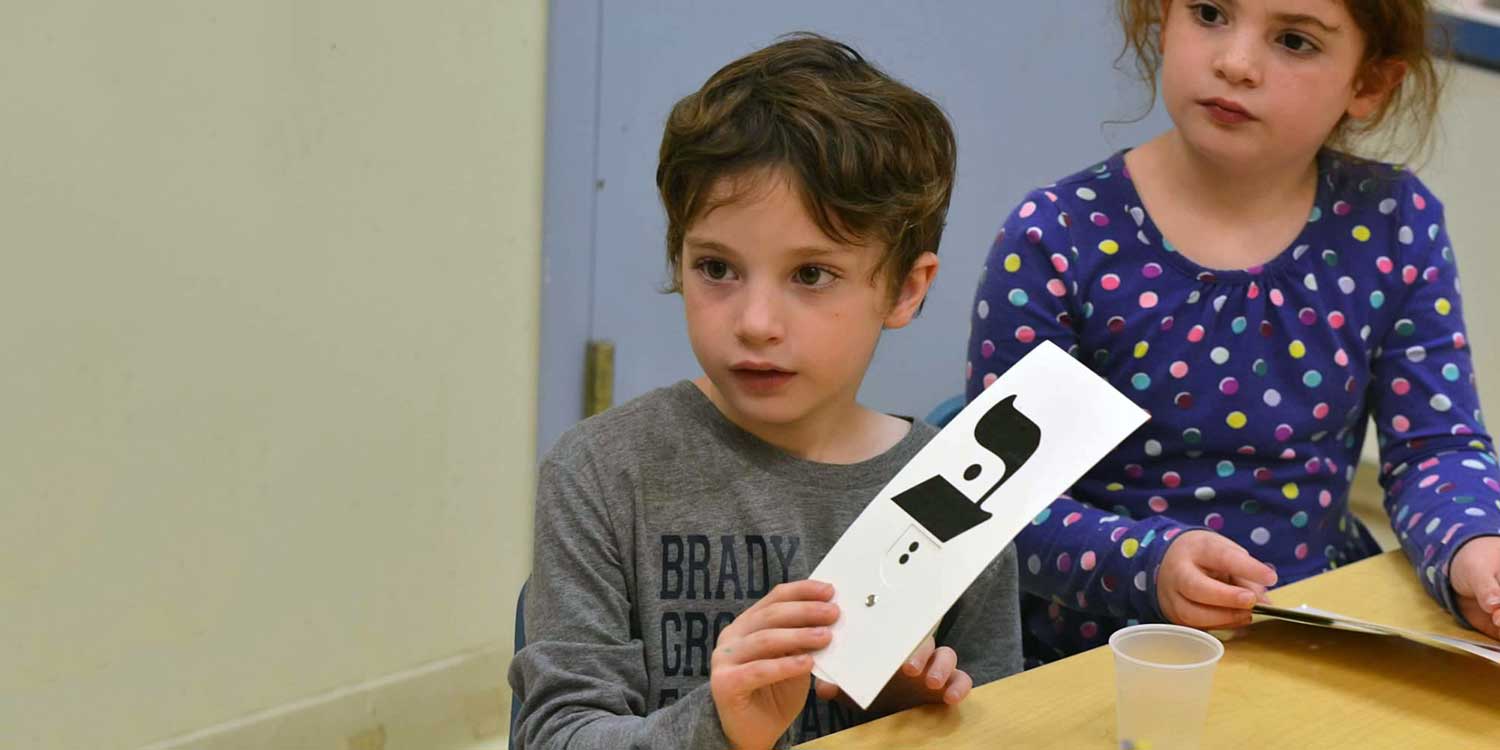
One recent example is HaTikvah: Our Hope for Israel, a curricular unit for 4th–5th graders that uses Israel’s national anthem as a gateway into dialogue across difference. The unit invites learners to unpack HaTikvah’s lyrics and explore how Jewish Israelis, Arab citizens of Israel, and American Jews relate to the anthem in distinct, sometimes conflicting ways. Through narrative, discussion, and creative expression, learners practice listening across perspectives, articulating values, and locating their own hopes for Israel.
Dialogue is central to this work because young learners are already absorbing messages about Israel from the world around them. Avoiding complexity does not protect them; it leaves them without the tools to engage thoughtfully or empathetically. By modeling civic dialogue early, we teach children that disagreement and belonging can coexist, and that hope is not naivety, but an active moral stance.
Looking ahead, I hope to expand this work by developing a partner unit for 2nd–3rd graders, using the Israeli flag (Degel Zion) as an age-appropriate entry point. I am eager to collaborate with elementary and family educators who are reimagining how thoughtful, respectful dialogue can begin early and deepen over time.”

Latest Volumes
Past Volumes








Built On the Roots of Tradition: New Models in Jewish Supplementary Education