ARTICLE American Creed: How American Youth Engage in their Democracy
By Sandee Brawarsky
Filmmaker Sam Ball and the nonprofit documentary storytelling company Citizen Film are spreading hope, empathy and a renewed commitment to America’s foundational democratic ideals in these challenging times.
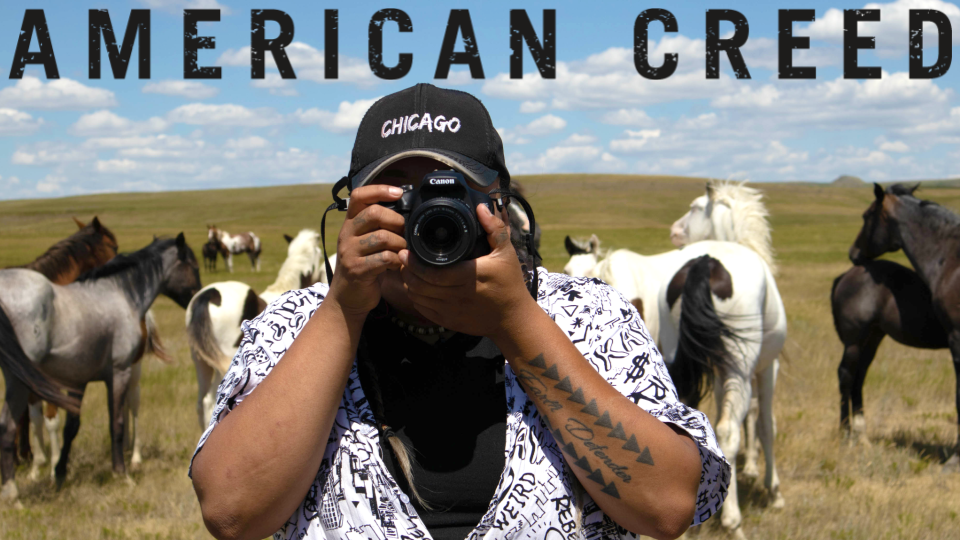
Their latest PBS collection of documentary films, American Creed: Citizen Power, presents the visions of young Americans from all over the country – of different cultural, class and ideological backgrounds – working to address challenges that affect their communities; through that process, they learn how to navigate America’s flawed democratic institutions to solve problems in meaningful ways.
Citizen Film’s initial program launched in 2018 with a PBS program that has been viewed by more than one million people over the air, online and in continuous use in schools thanks to distribution by PBS LearningMedia. American Creed: Citizen Power is this year’s multiformat continuation of the ongoing project.
The 2018 American Creed program wrestled with the question of American identity. The new program focuses on what we can learn from young adults about the way forward for American democracy. In addition to new shorts currently rolling out in batches across PBS online channels, PBS will release a limited series of half-hours across all PBS platforms in September. In the meantime, students around the country are watching and discussing American Creed “Citizen Power” PBS LearningMedia shorts. High school students learn from these stories and reflect together on shared ideals and institutions before writing common core aligned essays about how people in their own communities express and reflect shared ideals.
“This project starts from the thought tradition that says, America has a unifying creed based on a set of values, like life, liberty and the pursuit of happiness that are derived from our founding documents,” Ball says. He cites Reverend Martin Luther King, Jr.’s famous statement that the ideals expressed in these documents are a “promissory note.” One reading of our national purpose is that each successive generation is called upon to reach toward the realization of those ideals. The young adult leaders featured in the American Creed: Citizen Power project share this vision of possibility -- and responsibility. A recipient of Covenant grants for his work in 2011 and 2014, Ball is a masterful storyteller. But he doesn’t view the process of documentary filmmaking as directing people who are his “subjects.” Rather, he sees the people he profiles as full collaborators. The films are beautifully shot, with much attention to details that illuminate each young adult’s vision of what their communities’ struggles and successes mean for us as a nation.
Ball’s approach to casting, storytelling and audience-engagement integrates these activities seamlessly into Citizen Film’s partnerships with powerful civic organizations. Recent support from the Covenant Foundation encourages Jewish participation in a coalition that ensures the PBS series reaches a large and diverse audience.
Olivia Gross, one of the young adults Citizen Film cast in partnership with civic organizations fostering audience engagement, is the granddaughter and great-granddaughter of Holocaust survivors. She founded the first-ever comprehensive constitutional law program for high school students “to foster a debate environment, in a respectful learning environment.” In one of the American Creed films, she says that her passion for free speech comes from her family’s history. She connects her upbringing in the Talmudic tradition of argument to her passion for civic dialogue and American constitutional law.
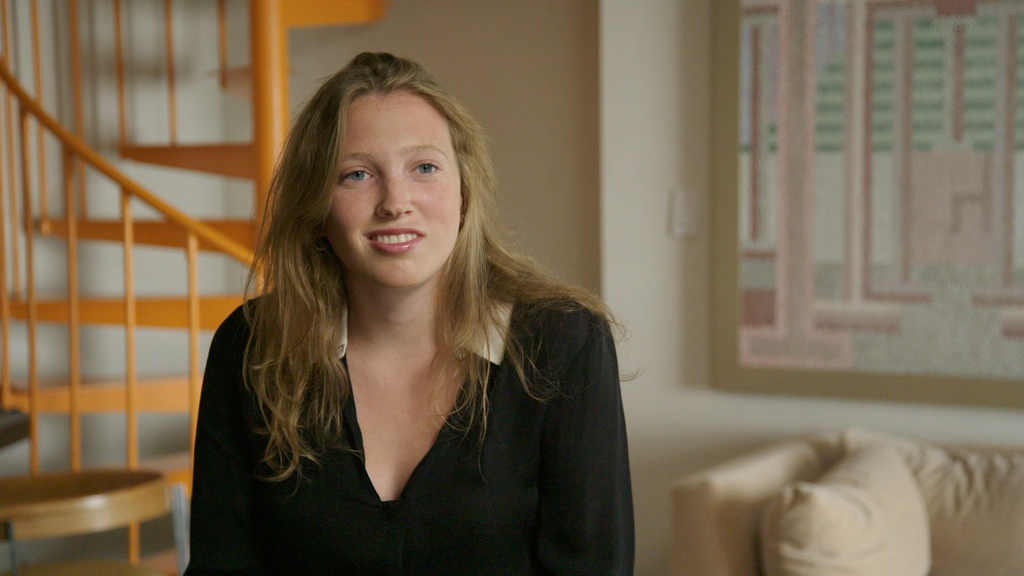
Olivia Gross in the PBS series American Creed directed by Sam Ball ©️Citizen Film
For Gross, truth is arrived at through respectful argument. She says, “You can’t really embrace an idea without understanding how that idea can be challenged.”
Each personal narrative is rooted in a young leader’s community and cultural background. Jonathan Blair, who comes from a long line of coal miners in Appalachia, engages with both cultural preservation and industrial change. Trinity Colón organizes against industrial pollution in her Southeast Chicago neighborhood in collaboration with her immigrant community that includes workers who depend on heavy industry for their livelihoods.
Colón says, “As an organizer, you’re always fighting against something you don’t want. And I think people don’t recognize enough the power of a conversation that helps us imagine together what we do want. Healing requires more than me exercising my imagination, dreaming and visioning by myself. It requires me going out and sharing those visions with other people, listening to other people share their visions, asking them what they dream about.”
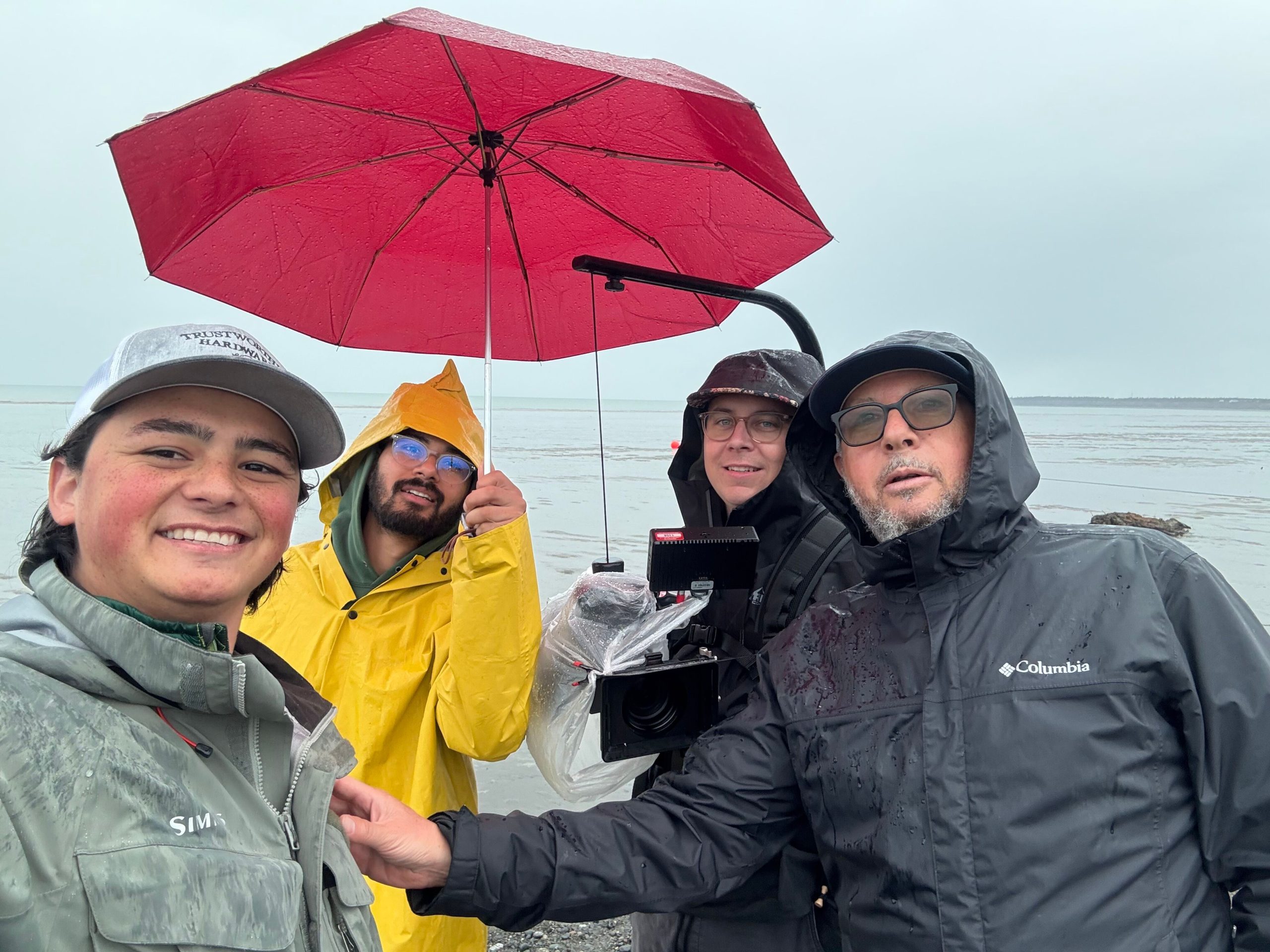
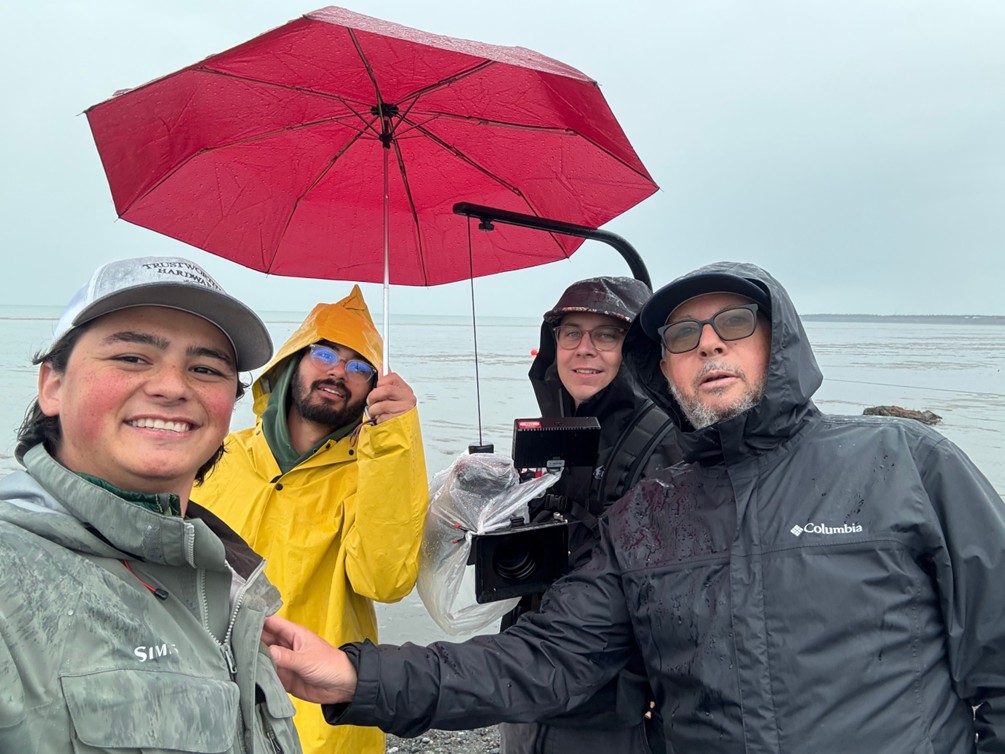
Sam Ball with (left to right) Sam Schimmel and Citizen Film crew members Manish Khanal and Quentin Smith
Sam Schimmel, another compelling protagonist, recently graduated from Georgetown Law. He is the son of a Kenaitze Indigenous Alaskan mother and a Jewish father. After the State of Alaska opened the Kenaitze’s traditional fishing grounds to commercial fishing but denied the Tribe a fishing permit, Schimmel became the first Kenaitze citizen to advocate for his Tribe as an attorney.
The young adults featured in the films – all persuasive, hard-working, pragmatic, but also earnest about ideals they believe are worth fighting for -- demonstrate the power of individuals to mobilize communities and institutions.
“We want to model what it looks like to build a more resilient democracy through community engagement and dialogue,” Ball says.
One of Citizen Film’s goals is to help high school students find and research issues they are passionate about, and discover the tools and techniques available to them to get involved in civic life. The National Writing Project – a teacher-led civic organization and longtime PBS partner – trains public high school teachers in all 50 states to use American Creed: Citizen Power resources to teach writing as a means of civic reflection, participation and action. Students publish op-eds that can have local influence.
Citizen Film’s approach is intentionally nonpartisan; all the project partners share a commitment to American democracy. Timed to PBS’ America@250 programming this summer, new shorts will be released on PBS YouTube Channel – to maximize reach among young adults. After that, the September 2026 PBS limited series interweaves the young people’s stories with on-camera dialogues co-facilitated by two scholars of American democracy: former United States Secretary of State and political scientist, Condoleezza Rice, and her Stanford University colleague David M. Kennedy, a Pulitzer Prize winning American historian known for his books on the New Deal. The series will be released across all PBS platforms. From their notably different perspectives, Professors Kennedy and Rice advise Citizen Film to ensure broad take-up that transcends partisan lines.
Ball sees Citizen Film, founded in 2002, as both a film production company and a civic organization. When asked about the through line in the organization’s work, he says, “We're interested in how people live together and solve problems. Our films show real people facing real challenges. Viewers may not share the exact circumstances, but they recognize the challenges and see solutions that make sense to them. That recognition builds empathy and reminds people that community can extend beyond their immediate circle – locally, and eventually, nationally.”
“We can be pragmatic,” he says, “and still work toward the realization of ideals. For me, the American Creed project is a way to counter some of the nihilism and hopelessness that can set in when democracy is fragile and we worry that our politicians don't share our values, or aren't capable of resolving the challenges we face. We hope to illuminate pathways toward citizenship in the fullest sense of the word: owning your part in American society and taking responsibility for its future.”
As America approaches its 250th anniversary, the young leaders profiled in American Creed demonstrate that this responsibility isn't abstract – it's found in organizing neighbors, advocating for communities, and engaging with democratic institutions despite their flaws. Their stories remind us that the American experiment doesn't depend on perfection, but on each generation's willingness to do the work.

Latest Volumes
Past Volumes






Built On the Roots of Tradition: New Models in Jewish Supplementary Education